



Urban Living
Urban Interventions.
For everyone.
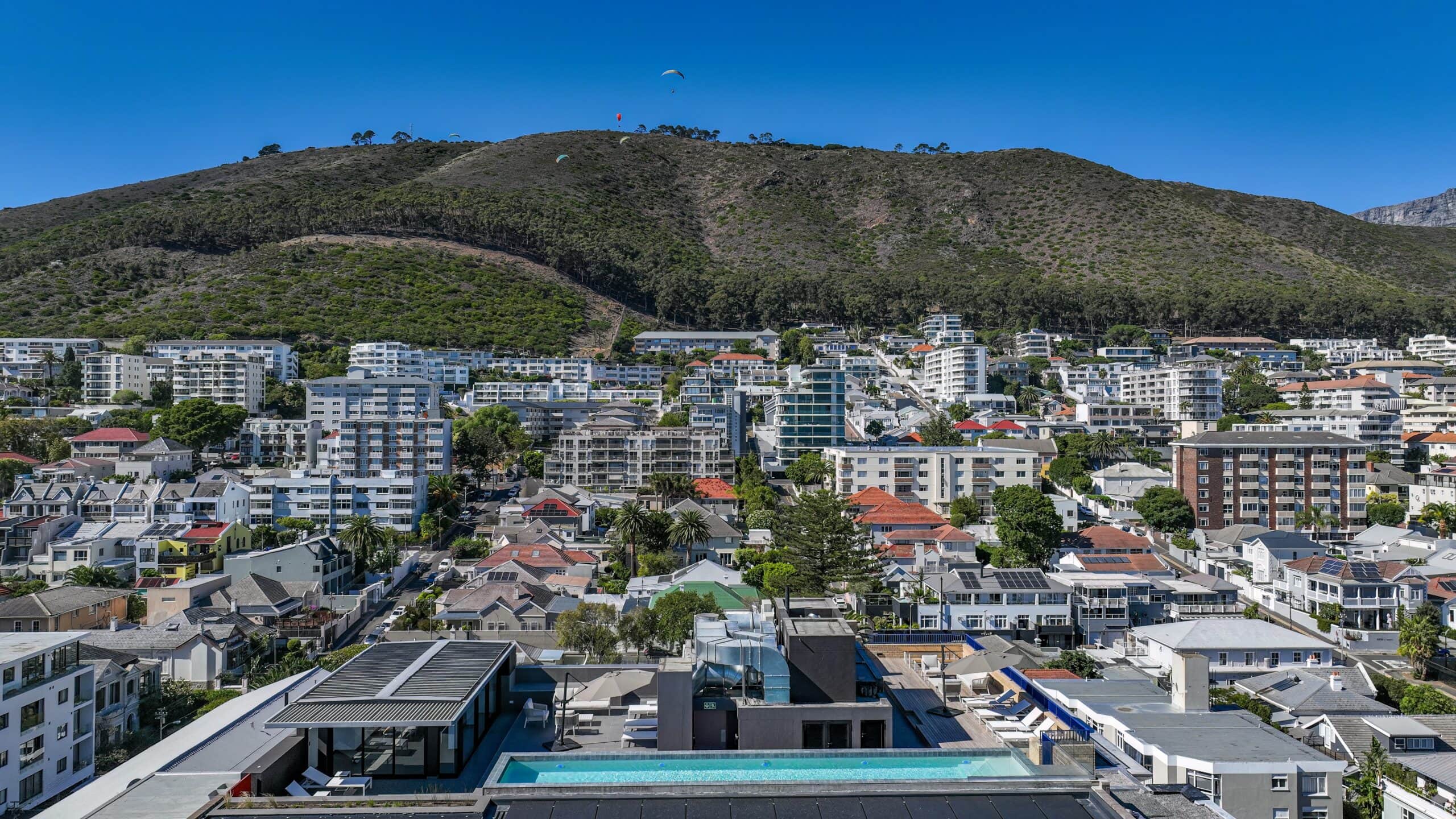
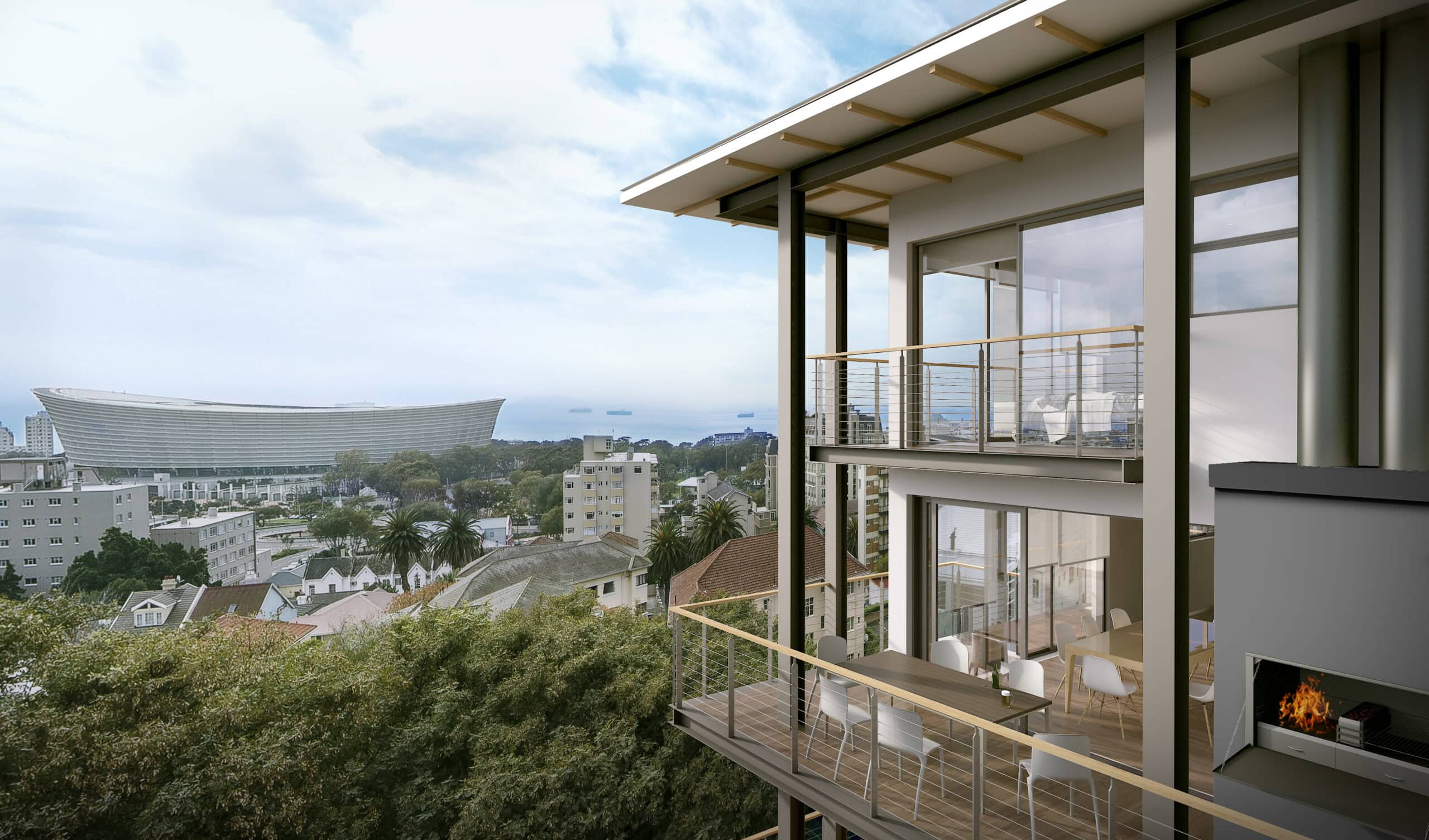
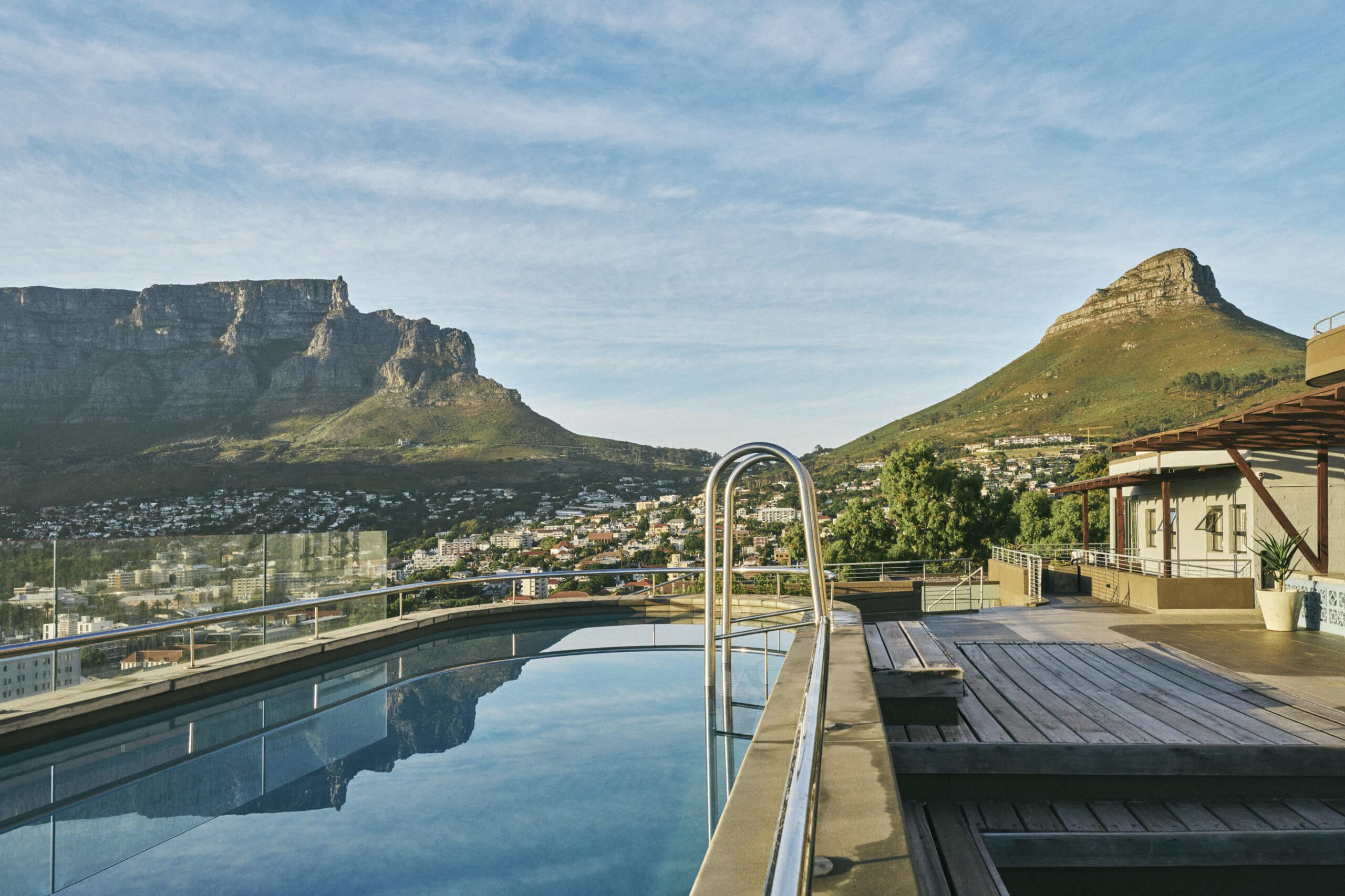
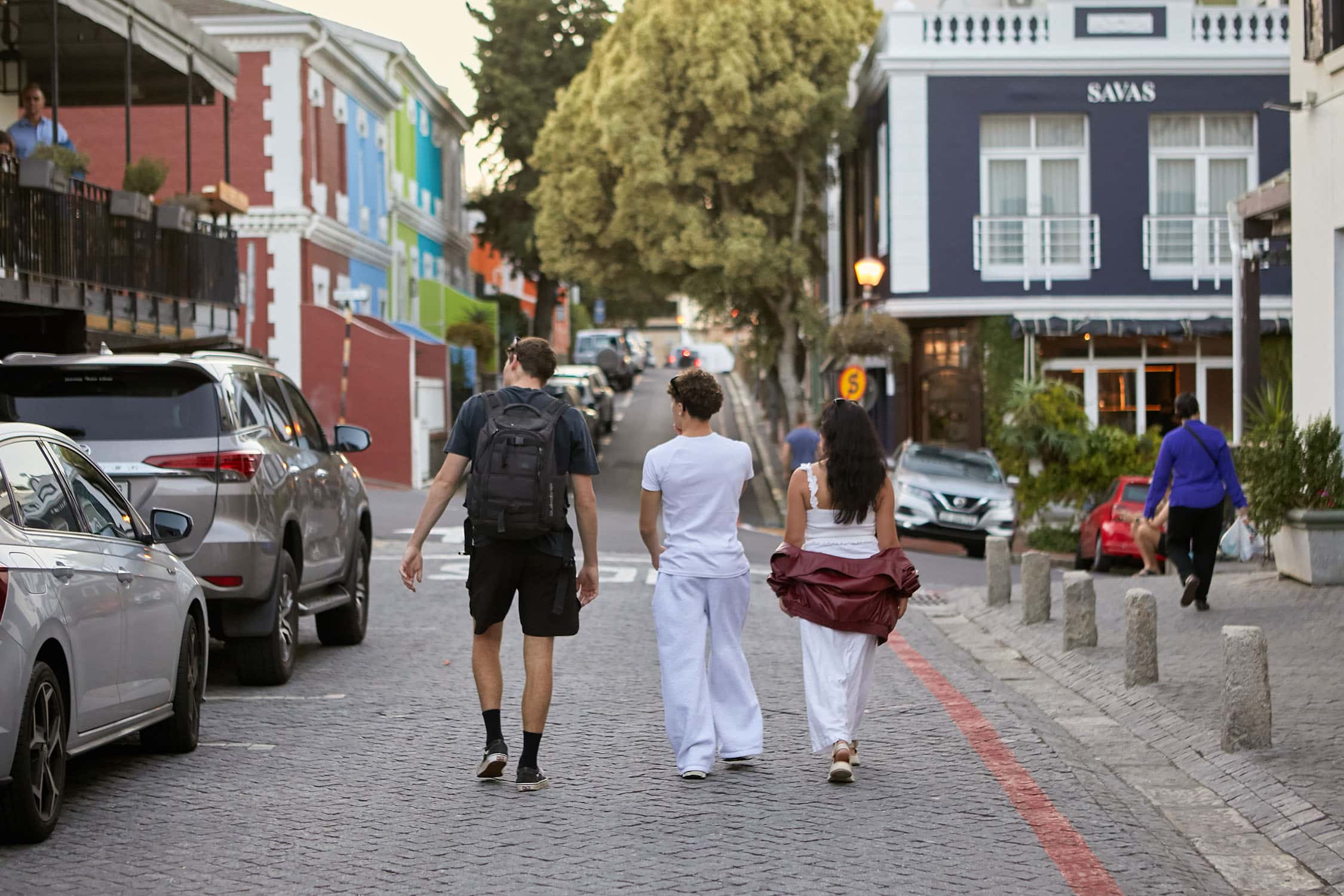
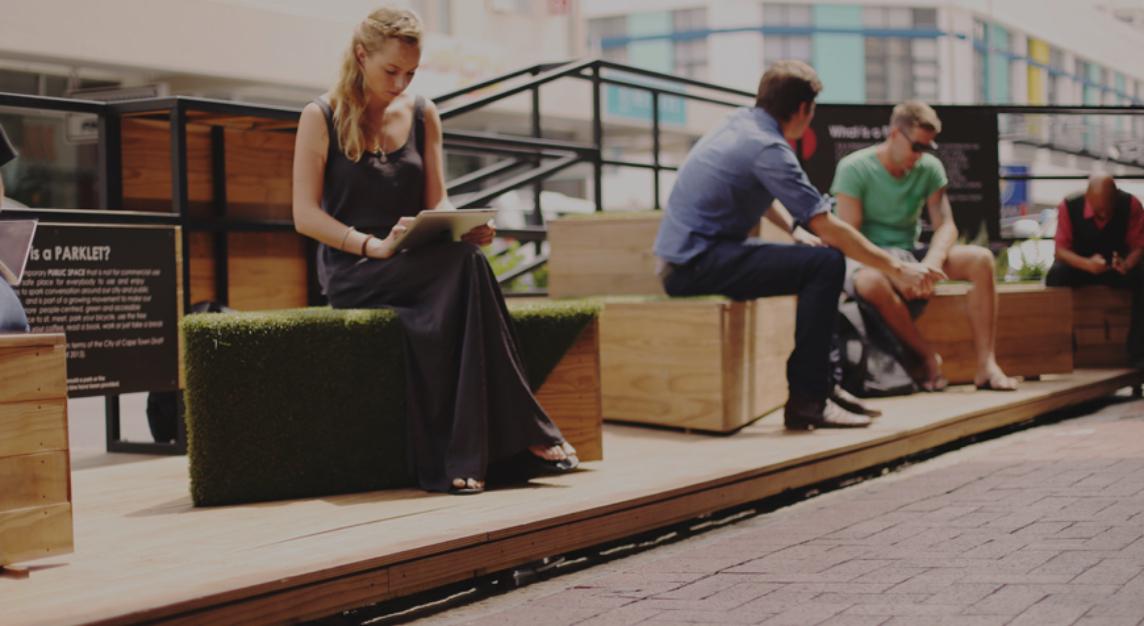
A building doesn’t exist in isolation. It forms part of a street, a precinct, a neighbourhood, a suburb and a city. We believe our work has a responsibility to extend beyond a development’s walls – to contribute to the vitality of the surrounding location. Through considered urban interventions, we help shape thriving neighbourhoods where people want to live, work, and belong. From an urban parklet to a pedestrian throughfare connecting two parts of a city, our vision is to create spaces for all to enjoy.
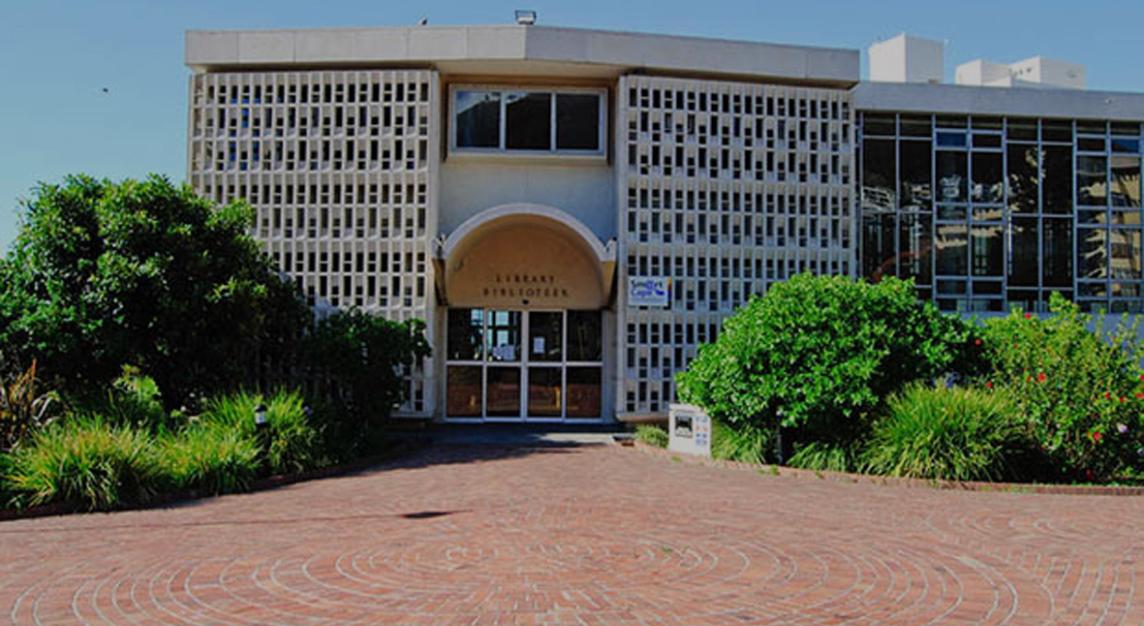
Sea Point Sea Point Library Square

Sea Point Promenade Blade

Regent Road Parklet

City of Cape Town Thornhill Park

Hero
Description
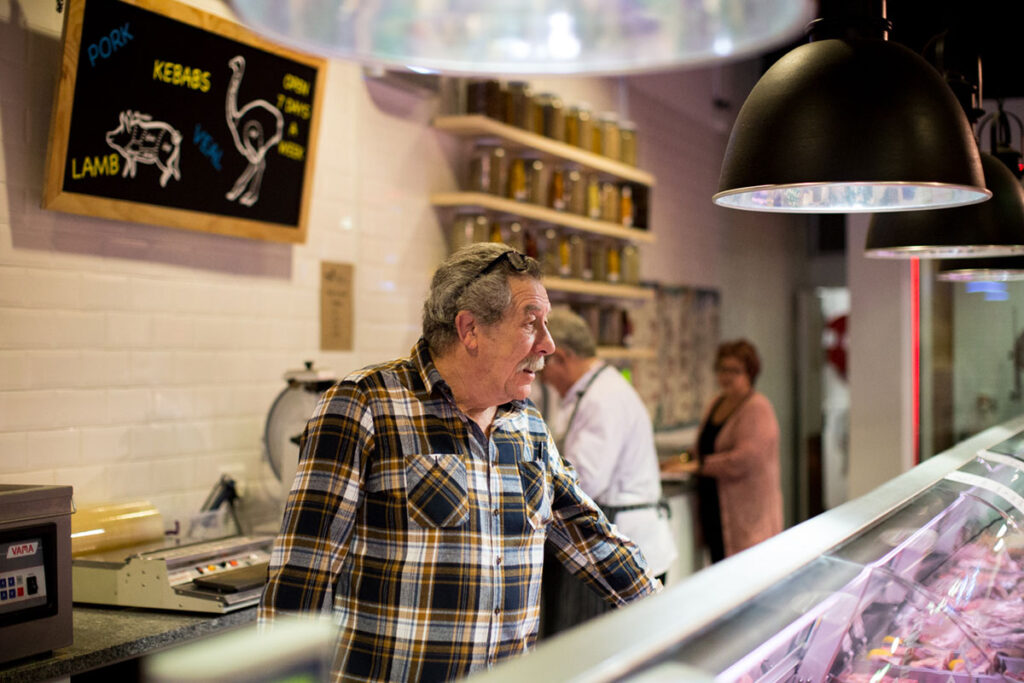
The Butcherman
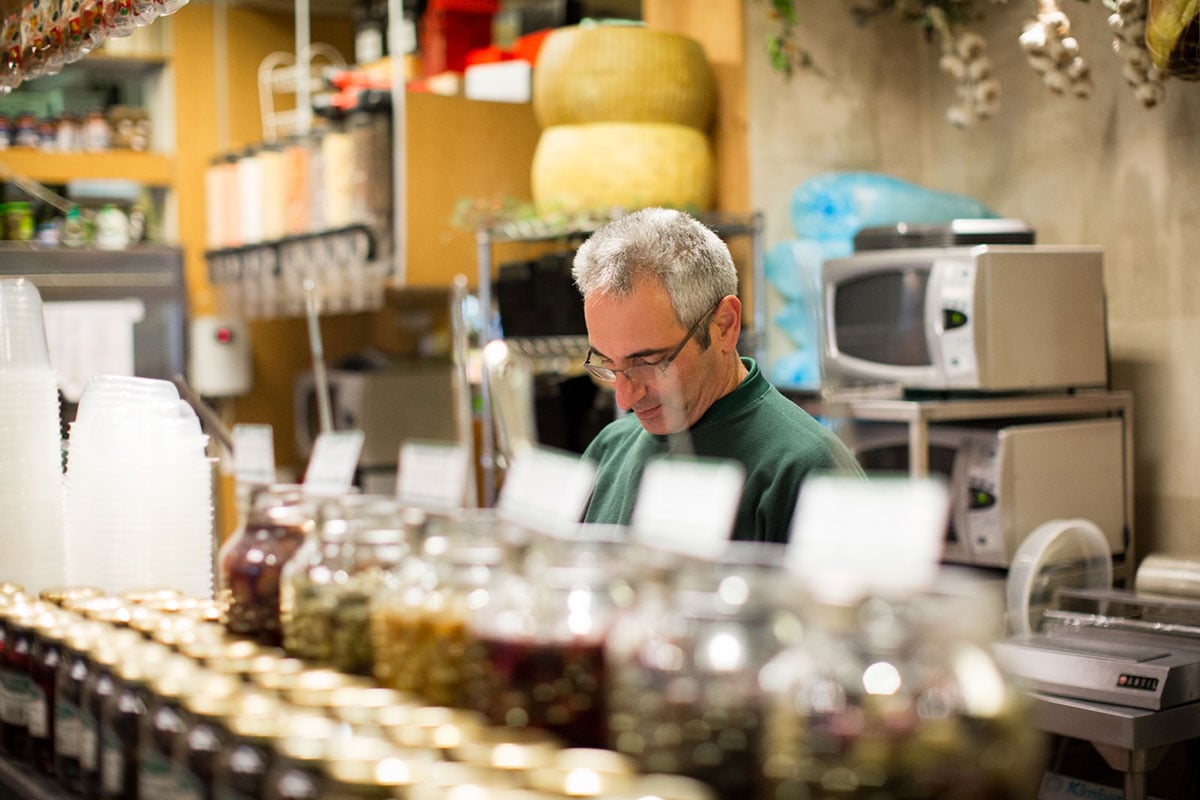
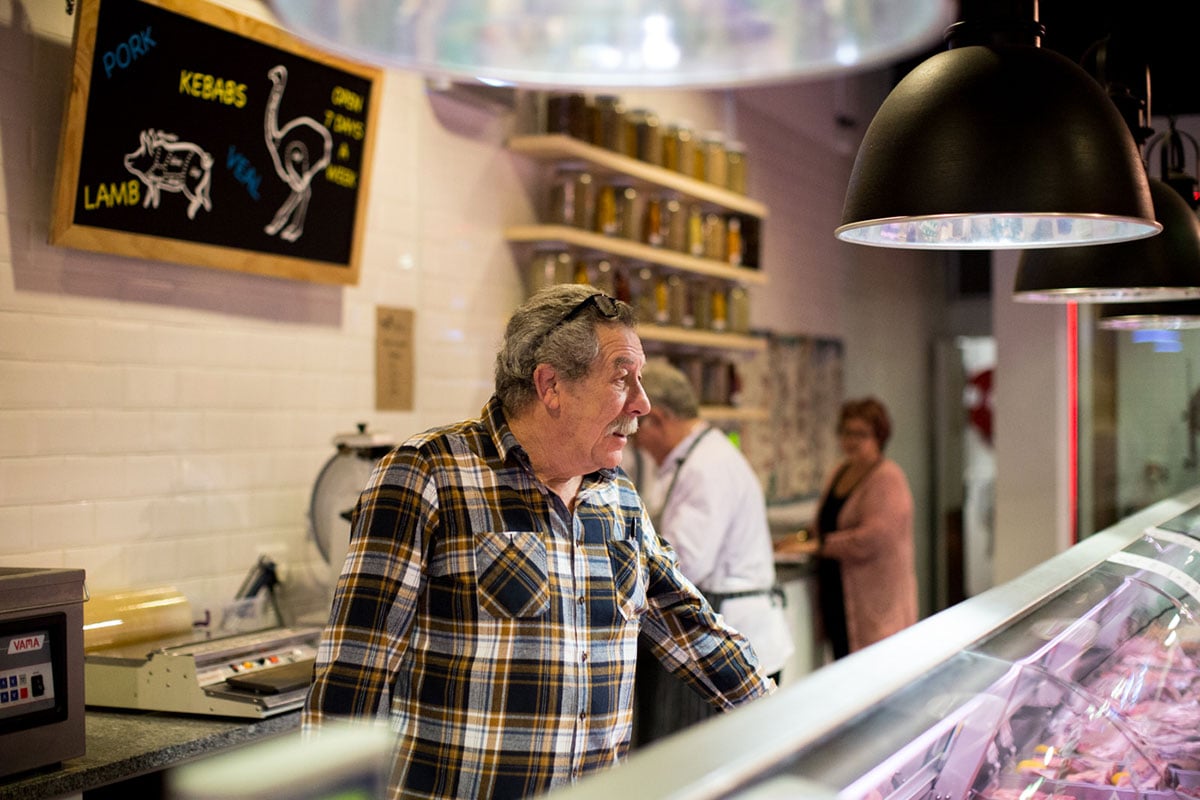
The corner butchery is back in fashion and the owners of The Butcher Man, Mimi and Gerald Winkler, see Green Point as a prime location for a contemporary business like theirs. They firmly believe people want more out of their local retail food store and offer a personal and tailor-made customer experience.
You’ve relatively new to Green Point, what attracted you to this particular spot in Cape Town?
Compared to everyone else around us, we really are! We opened on the 4th of July 2013 and chose this spot because it’s in a prime position on one of Cape Town’s most popular strips. You’ve got Giovanni’s a stones throw away, the best pizza next door at Big Route – the area is bursting with quality businesses and is a hub of community and activity. We first came up with the idea because there aren’t any butchers around this area. People are moving away from supermarkets because they want quality and personal care. The corner butchery is coming back into fashion and we wanted to bring the concept to Green Point.
Describe to us the different types of people you see on a daily basis?
We get regulars that come all the way from Higgovale, Vredehoek, Camps Bay, Melkbos and Constantia. They come because of our solid reputation and quality meat and we love that we’re able to provide an offering to our locals, but we also make it very easy for anyone to travel from farther out to get our products. We get regulars and overseas visitors whom we pack meat for and send abroad.
What do you think the residents of Green Point want?
They want convenience, a quick meal and high quality. They also want to be able to discuss their meat with their butcher face to face. That level of customer interaction and education is rare in the retail food industry. We help them with ideas and offer advice for cooking and preparing meat for their friends. People want to know more about what they are consuming and feel they deserve the right to gain that level of insight directly from an expert. From spices, to cuts, to types – they’re after a variety of knowledge.
How does it feel to work in an area like this?
Oh the energy of Green Point inspires us, there is always something going on around the corner that makes working here constantly exciting. It’s really a bonus that it’s such a beautiful spot! The fact that we aren’t stuck in the middle of a mall is crucial element to who we area as a ‘designer’ butchery – we want to be right here where all the action is.
Do you find that more people are moving and settling in Green Point?
We find that parents whose children have left home are moving to this area – just like us! We moved from Constantia.
Indulge us… what is your most exotic type of meat?
We have crocodile, quail and pigeon. We definitely don’t have horsemeat!
Hero
Description
Sheryl Ozinsky
Sheryl, when writing this feature, we struggled with what title to give you. It’s no secret you’re not a fan of the job title per se, so how would you like to be known?
Besides the two listed, my biography includes having once been marine biologist who was privileged to launch the Whale Well at Iziko Museums and the Two Oceans Aquarium at the V&A Waterfront, an establisher of two industry-led recycling organisations, PETCO and POLYCO, that currently collects millions of Rands in recycling levies from packaging manufacturers to increase plastic recycling, and now turned urban farmer growing multi-coloured rainbow chard under the shadow of Table Mountain. See if you can work that into an easy to pronounce acronym..!
You’re getting a lot of attention for the City Farm these days, but you also assist the city with their Electricity Savings and Solar Water Heater Campaigns, can you tell us more?
Three years ago I started working with the City of Cape Town helping residents to save electricity. One of our slogans was, ‘If you sing in the shower, sing shorter songs’, referring to the fact that heating water consumes almost 40% of the electricity in your home. But using electricity more efficiently is not only about saving money. It is the most environmentally friendly and easiest way to reduce the risk of loadshedding – a term that’s become part of our lingo – and to reduce our carbon footprint. Reducing your electricity usage and helping the environment go hand in hand. If we don’t save its not just higher prices that will affect us – the extra power stations that the government will have to build (and is building) will cost us the beauty of our environment too.
How did you first get involved with city improvement and what is your ultimate goal for your work?
Ah, it was a long time ago (before my hair was grey) when I started working in tourism that I realised that I could combine my love for this city with my other love – a drive for sustainable development, improving the quality of our lives without it impacting negatively on future generations. I care deeply about making a difference and can see how a small piece of land in Oranjezicht where we grow food has changed the character of our neighborhood with people working together to beautify, sustain and improve the area across boundaries of age, race and gender. There is a palpable sense of pride and belonging that is flourishing in Oranjezicht alongside the beetroots and buchu.
Importantly, we’ve created jobs, we’re helping to upskill people and we are hopefully inspiring people to make changes in their own lives, improve their health and well-being, and adopt sustainable lifestyles. How about this as a wish to work towards – to find ways to ensure that all Capetonians – rich and poor – have a fair chance of getting wholesome, affordable, nutritious food onto their plates every day.
For property owners looking to move into the area, what would you say are the unique selling points and reasons to move here?
Besides all the usual attributes such as views, proximity to the city, schools, facilities, etc. I would say that we have a very special sense of community where people interact and talk, where residents are starting to get to know each other and feel safe to stroll their neighborhood and enjoy their parks. There are many local actions occurring simultaneously – residents looking after safety through neighborhood watches, volunteers growing food, locals who are informed and therefore empowered to get hold of their Councilor or someone else in the City and ask for a pothole to be repaired, a vine to be cut off an oak tree that is strangling.
Tell us more about the future plans for the farm, and also the market?
At OZCF, we have realized that the shared language of food is a unifier, bringing people together who would not have previously have interacted. We’ve seen a diverse group of peoples’ lives change and individuals enriched. Growing heirloom veggies is addictive, but growing a community, now that is worth getting very excited about.
We hope that one day our farm and a multitude of other urban farms will meld into the fabric of Cape Town, the presence of our work becoming as regular as the work of bankers, teachers and men working on the side of road. I dream that one day urban farming will not be a struggle, but an intentional component of the city’s food system. Abundant farm plots will pop up in every neighborhood and corner shops and markets will be able to proudly say that they carry produce grown right down the street. OZCF and other urban farms will have rich, deep soil from compost made from residents’ kitchen waste. There will be communal greenhouses that grow healthy seedlings for urban farmers who grow salad greens, tomatoes and herbs year round.
People will walk past empty plots that are often eyesores, not ignoring them, but converting them into places that feed, enhance and beautify neighborhoods. Retailers will label locally farmed foods, such as that coming from the Philippi Horticultural Area, so that consumers can choose this food over produce that has come from further afield. And more than anything, we hope that growing food will enable people to change their ideas about how a city feels and what is possible in an urban environment.
Hero
Description
Mano\'s
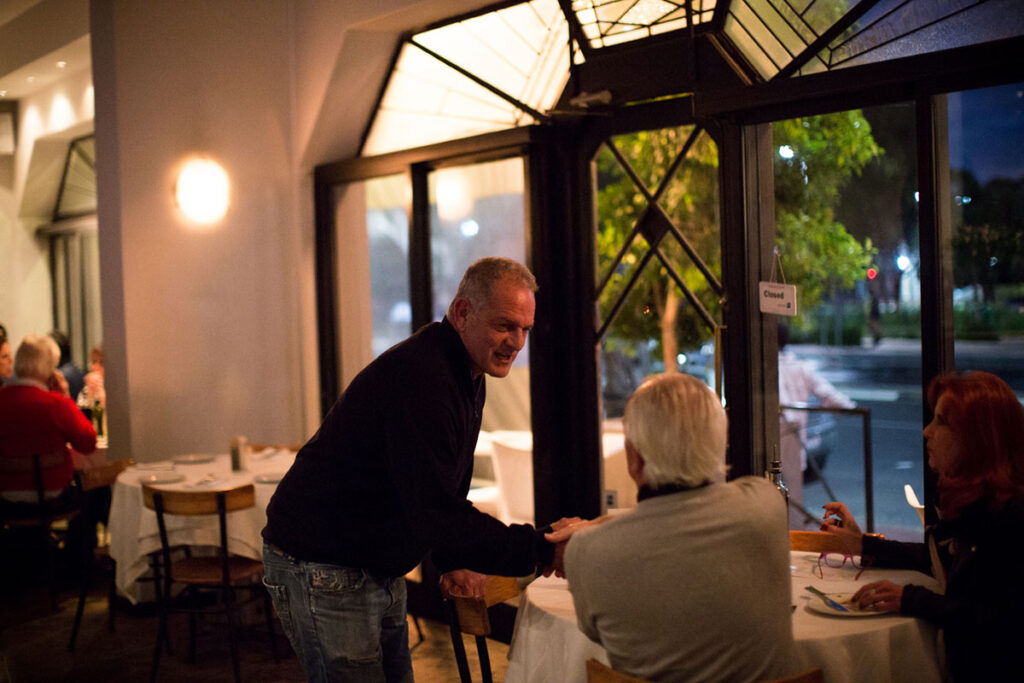
This Cape Town institution stands as the benchmark for uncomplicated, consistent and casual dining. The name “Mano’s” reads like a one-word definition for success in the South African restaurant industry…. They’re one of the only establishments to abide by one strict rule for over 18 years: No Reservations. With Mano at the helm of the kitchen, the minute you walk past the threshold you’ll feel right at home. On any day of the week, the energy of Green Point Main Road echoes through the restaurant. Don’t forget to save us a seat!
What year did you first open your restaurant and were you always interested in doing so in Green Point?
I started Mano’s in September 1996 after eight months of searching for suitable premises. The premises were centrally situated and had been home to an Italian restaurant called La Mafia for many years. La Mafia unfortunately closed, and what with such a beautiful and well-located building, I decided I had to take over the shop.
After 18 years, what has been the biggest change in Green Point that you have noticed?
The area was not well lit and had many seedy elements to it when I first started here. Mano’s, Giovanni’s and then rundown Claridges Hotel were the only establishments in the area. Lets not forget the Synagogue too! It took five years for Mano’s to settle into what it is now: an established restaurant feeding three generations of customers, regular travelers from all parts of the world and local residents. Then came the stadium for the World Cup, and wow, has that made a difference! Apartments have been built around the area and it’s become a shopping strip too. That, together with bars and other food outlets, has made Green Point one of the best spots in South Africa.
Tell us a little bit about the foodie culture in Green Point?
I think this strip caters to people looking for comfort, familiarity in their surroundings and consistent food! We haven’t seen the upmarket delicate flare that “foodies” might expect from renowned chefs, but it certainly caters for variety of people looking for “a home away from home.” That’s who we are, and what we look for in other establishments.
In this day and age what do you think the diner wants?
In my humble opinion, people are generally looking for a great all-round experience, and that is what I have strived to do for nearly 18 years at Mano’s.
Hero
Description
Lunch with the Locals
Blok recently invited a handful of Sea Pointers to their Regent Road exhibition space to have lunch and talk about the neighborhood: what it means to them, what they love, what their Sea Point secrets are, and what they see in its future.
Pieter supplied the bubbly from his in-laws’ farm, and over a few bottles, with some delicious food provided by Tal, the conversation flowed, new friendships were formed and a host of new ideas for the area dreamed up.
Form & Function
“You can’t curate a city, it happens in different rhythms and on different layers. It’s what makes it so exciting and filled with opportunity and adventure” – Jacques
Rashiq, when discussing one of his favourite things about Sea Point, said “it’s the fact that all of the fundamental businesses are here – the Post Office and butcher are next to a boutique coffee shop, across the road from a hairdresser and nail salon.”
“Sea Point is the first place in South Africa that’s trying to combine the wealthy and the poor in one street”, says Jacques. “This is why you’ll have an internet café on a street right next to a boutique. It’s tough to get that reconciliation right but this incredible stretch seems to manage it. There’s also a beauty in the competitiveness of Sea Point, the pressure is quite unforgiving, but it pushes businesses to achieve more, or they won’t succeed.”
“The pavements in Sea Point also feel generous enough for pedestrian traffic, something that’s really important for a city and often overlooked,” said Lior, “all that is needed is critical mass for people to feel like they can walk the streets comfortably and safely.”
Walking Distance
“For me the best part of working, having my morning coffee and living within 100 steps of each other is that I feel like I’m living in the Truman Show, but in the best way. It’s greeting every second person as you walk the street, and feeling like you belong to a tight-knit community. You just can’t put a price on that.” – Lior
Rashiq’s idea to make Sea Point a better place to live is “to make some pedestrian crossings clearer and the green light for pedestrians longer, and in doing so people will feel safer walking. In New York, you don’t even need to look up when crossing to check for cars, it’s a given that the cars will stop for pedestrians. That security immediately encourages more pedestrian traffic.”
Pieter suggests that a street festival or craft market once a week or month would encourage people to get out and walk the streets of Sea Point. “Closing a busy road like Regent down to cars once a month and getting people out and about walking, socialising, shopping and eating would be a fantastic way to remind people of the enjoyment of experiencing one’s city on foot. Look at how successfully First Thursdays has achieved this for the CDB?”
Jacques continues: “the best part about walking around the city instead of driving is that once you start there is a compounding factor that comes into play. Initially you may only walk until you reach a certain distance, but every 3-6 months that range keeps extending so you walk further each time, until walking from one end of Sea Point to the other doesn’t seem that far. To me, The Point now feels as close to walk to as Bootlegger used to from my apartment in Clarens Road. Plus the massive benefit is how much more of the city and people you see and interact with when doing so.”
On Reminiscing…
Tal’s favourite memory of growing up in Sea Point is, as a girl of about 10 years old, walking the streets of Sea Point with her friends without adult supervision. When her parents and their friends would sit on Main Road at their favourite Middle-Eastern restaurant at night, the men playing “sheshbesh” (backgammon) and the whole street vibe was busy, fun and most of all, safe. “We have a video of those days with the streets jam-packed at night, kids walking around in packs, families walking to dinner or friends, and now as a mom I wish my kids could have that experience. I miss not being able to walk around safely at night, it’s slowly improving in places but there’s work to do to get people feeling safe and out on the streets after dark again.”
Neighborhood Heroes
“My favourite time of the day in Sea Point are 5 minutes before sunrise or 5 minutes after sunset, because you know you’re either about to have your first coffee or your first glass of wine.” – Pieter
Lior: “When Bootlegger opened on the corner of Clarens and Regent, that corner changed and became a well-used and safe corner again. When a business opens in an urban setting and thrives, it encourages others to do the same as they see the risk softened.”
“That’s why I count Kleinsky’s as amongst my favourite Sea Point spots,” commented Shaun, “its traditional Jewish bagel shop with old ladies buying chopped liver and bagels, amazing coffee, incredible music playing in the background, and run by two young guys that are passionate about the area. The more community businesses like these that open and succeed the better. It’s something that Cape Town does extremely well; we’re very good at launching artisanal-type businesses. This encourages entrepreneurial spirit and creativity.”
For Rashiq, his Sea Point hidden gem is also his home address; Main Road in the Oliver Road region with it’s Greek and two Italian restaurants, a Shwarma shop and a Fruit & Veg shop that everyone visits at some point in their Sea Point experience, within walking distance of each other. “It feels like twelve countries represented in one small street.”
Shaun’s other hidden gem, also a few short steps from his home, is none other than Brian’s Pub. The fact that it is a completely down-to-earth ‘dive-bar’ in the middle of Sea Point, and a few short steps from one of the prime strips of land in Cape Town, is a representation of the true Sea Point diversity. Where else in the world would one find this>
Here’s to Sea Point… (glasses clink)
Hero
Description
Lazari
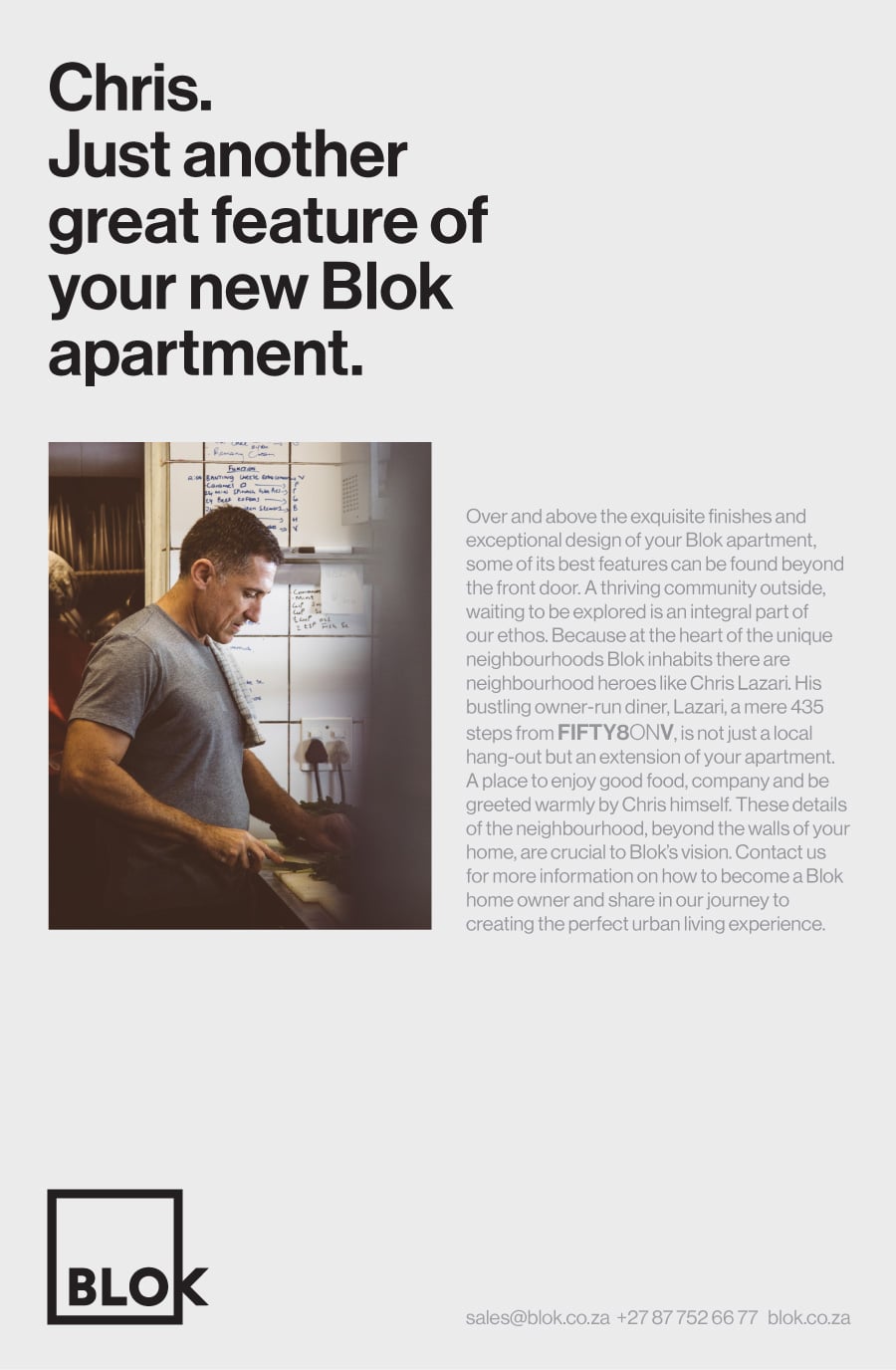
It’s the go-to venue for local mom’s post-school run breakfasts, business meetings amongst resident freelancers, or if simply in the mood for a home-baked sweet treat and free WIFI.
Owned and run by Chris Lazari, the bistro is open 7 days a week throughout the year, and has seen much positive change in it’s 11 year reign on the corner of Upper Maynard and Vredehoek Avenues.
Chris, how has the area changed since you opened your doors 11 years ago?
The area has seen an influx of younger families moving in which is a great sign for the future development. Vredehoek was historically a very Jewish area but this changed when a lot of the Jewish families moved out approximately 10 years ago, and since then the demographic has become more diverse, and more recently seen a welcome return of young parents and start-up families.
What advice would you give people looking to buy in the area?
Buy soon! A few years back there was huge opportunity to buy old and renovate, but those opportunities are now few and far between. The area is only increasing in value so is a definite investment.
What do you like most about your location?
Definitely the proximity to the CBD while still feeling as if one is in the suburbs. Vredehoek is a juxtaposition of benefits, from the mountain walks and views to the greenery, plus the closeness to town and the feeling of space and remoteness. It’s a special area that is not easy to replicate.
What improvements have you seen in the area since you’ve worked there?
The neighborhood watch is phenomenal. They ensure that there is a good safety and security and that permeates from the low crime statistics to the feeling one gets when in the area. That is not to say the crime rate is 0% but it’s on the decline and far more opportunistic and petty than in other areas.
Describe Vredehoek in one sentence:
Vredehoek is about community, that and delicious cupcakes at Lazari!
Hero
Description
La Perla
45 years ago La Perla Restaurant opened its doors on Sea Point’s beautiful beachfront and instantly became a significant Cape Town landmark. The restaurant has a life of its own, as current owner Baylon Sandri, son of founder Emiliano Sandri, explains to us. La Perla is all about the atmosphere, the style and consistently good food – a typical Italian seaside restaurant brought to the shorefront of Cape Town.
How has La Perla developed over the years?
My father was very involved when they bought this building, both in the design and the concept. I remember when I was young the neighborhood was far more quaint, and then it turned into something similar to Voortrekker Road. Now it’s coming back and I think the momentum is really shifting. When my father opened here you had queues midday down the street, and in the 90’s we would seat 600-700 people in a day.
When did you jump on board?
My father opened in town in 1957 and when the lease was up, moved to Sea Point in 1969. My brother and I took over in 1996. This restaurant has a life of it’s own, and it wouldn’t make sense for us to give it up.
There’s definitely a sense of nostalgia here….
We often have three generations under one roof. For example, on a Sunday you’ll have the grandmother having lunch at the one table and the kids at another and the nice thing is they seem to feel totally comfortable. They all enjoy being in the same place because it is neutral; there are all ages and all types.
Tell us a little bit more about the regulars that visit La Perla?
My father had a huge crowd of people that were part of the original “crew” and they would sit until 3am here. I think there was a family feeling, I grew up knowing all these people and I still see them. There are regulars who don’t come for 10 years and then they come back again and it feels like they never left!
Do you notice a big difference between winter and summer months?
There’s definitely an improvement in the winters now, there is a different atmosphere and it doesn’t go totally dead anymore. People don’t have that seasonal defective disorder as badly anymore! There’s also a huge influx of people moving to Cape Town and I’ve noticed it’s becoming faster-paced here, traffic is earlier and it’s not a village anymore. In general, it’s a combination of tourism and the fact that it’s a very well run city.
As a longstanding business owner, are you hopeful about Sea Point?
Sea Point has turned around! It must retain a little character and still feel like a coastal village. I feel like a tourist sometimes. Cape Town is such a cosmopolitan place where people are confident to be creative. You’ll find that Sea Point will become the place where these individuals will find they can open their own brands. There’s something happening here and I’m so happy it’s happening in Sea Point.
Hero
Description
Giovanni\'s
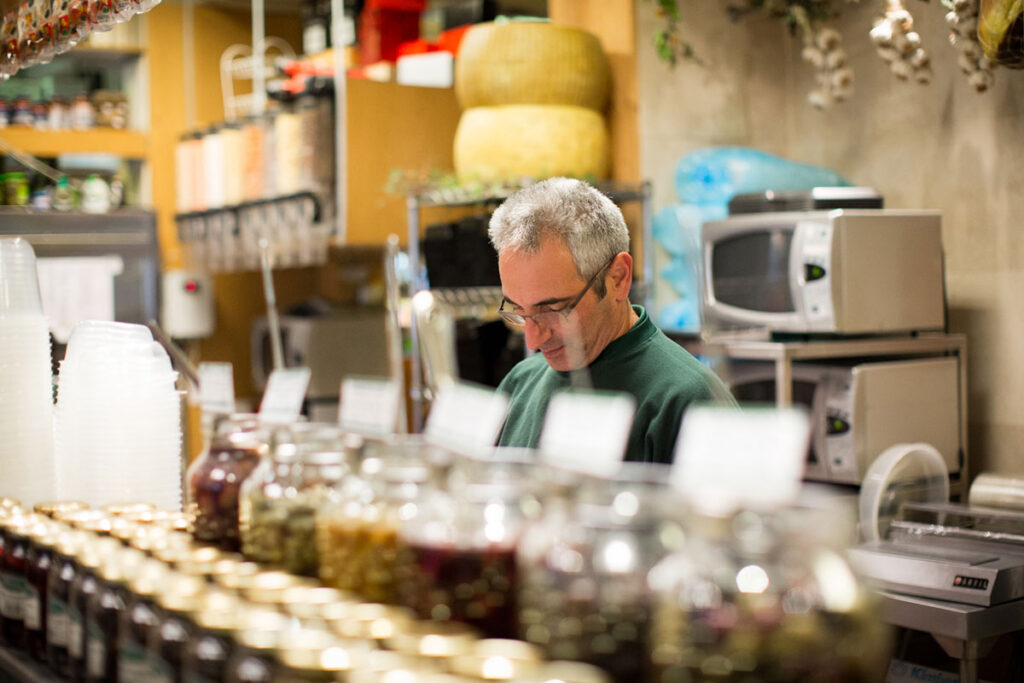
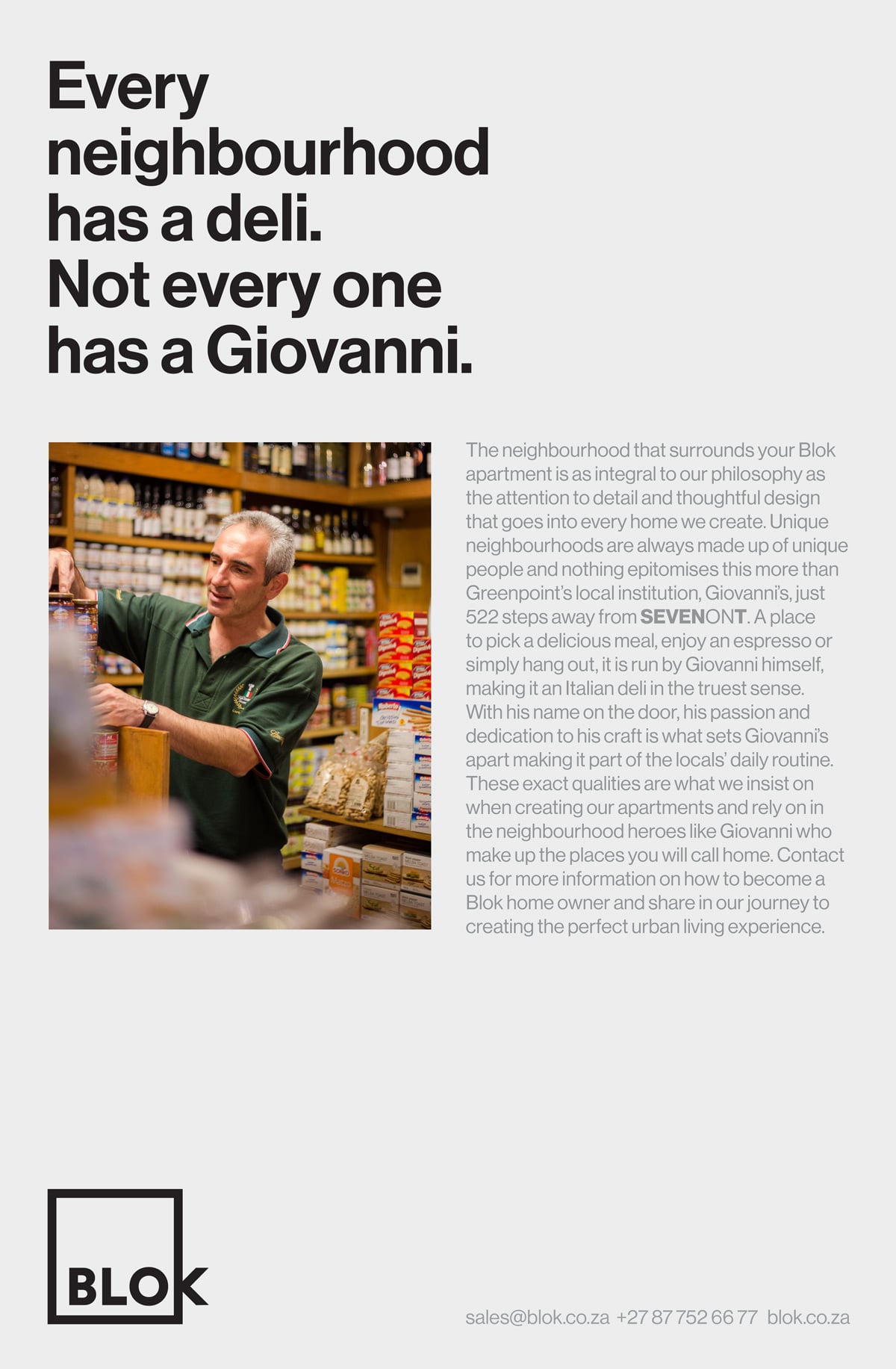
After working for the famous Riseses delicatessen during the 80’s, Giovanni Esposito was struck with the desire to open a fine food delicatessen of his own in Green Point. Giovanni’s is Cape Town’s first authentic Italian Deli, brimming from floor to ceiling with drool-worthy gourmet food, imported deli products and revitalizing espresso. But be warned, one sip and you’ll be buzzing around the bend all day. Giovanni’s is a beloved local germ that is widely believed to have facilitated the start of the regeneration of Green Point Main Road.
When did you first decide to open Giovanni’s and why in that particular spot?
I worked for Rieses for six years, which was an upmarket delicatessen in Sea Point during the 80’s. I was looking around for premises to start my own dream delicatessen and was lucky enough to find an existing café in Green Point called Stadium Café. I bought it and it broke my piggy bank! I was brought up in Green Point and was CBC School just up the road so I knew the area very well and believed the location was spot on. I can’t believe how underrated this area used to be.
How has Green Point changed over the years, and more importantly how has your deli changed the face of Green Point?
When I started in Green Point in 1989, it was such a run-down area. Many people called me brave to start my business here, but I persevered! I managed to clean up the area surrounding my shop and eventually people started noticing. New businesses started around me and that helped clean up the area too. Then there was the birth of the V&A Waterfront right there on our doorstep. After that, Green Point was completely upgraded by the City of Cape Town to accommodate the FIFA World Cup in 2010. I like to believe that Giovanni’s started the regeneration of Green Point Main Road.
How crucial is it for a suburb like Green Point to have an offering like yours?
Green Point is a dense suburb with so many people living here and that is why I believed my concept was going to work right from the get-go. The idea was to provide ready-made meals and related convenient products to the locals, which wasn’t on offer before. The coffee bar became the local meeting place.
Do you notice a certain type of person coming to shop and eat here?
We have a very high-income bracket clientele who we service everyday. Some have been coming for so long that they are like family to me. We also have a large amount of foreigners visiting our deli every year, which brings an important and exiting energy into the establishment. We love hearing feedback from our customers and engaging with people who love great food, in a fantastic area.
How does it affect your overall take on life to work in such a lively area like Green Point?
I have been doing this for 25 years and nothing has changed. Working in Green Point everyday is what keeps me going. The people, the vibe, and the energy… it’s the best place in the world and absolutely amazing to be part of it!
Hero
Description
Bootlegger
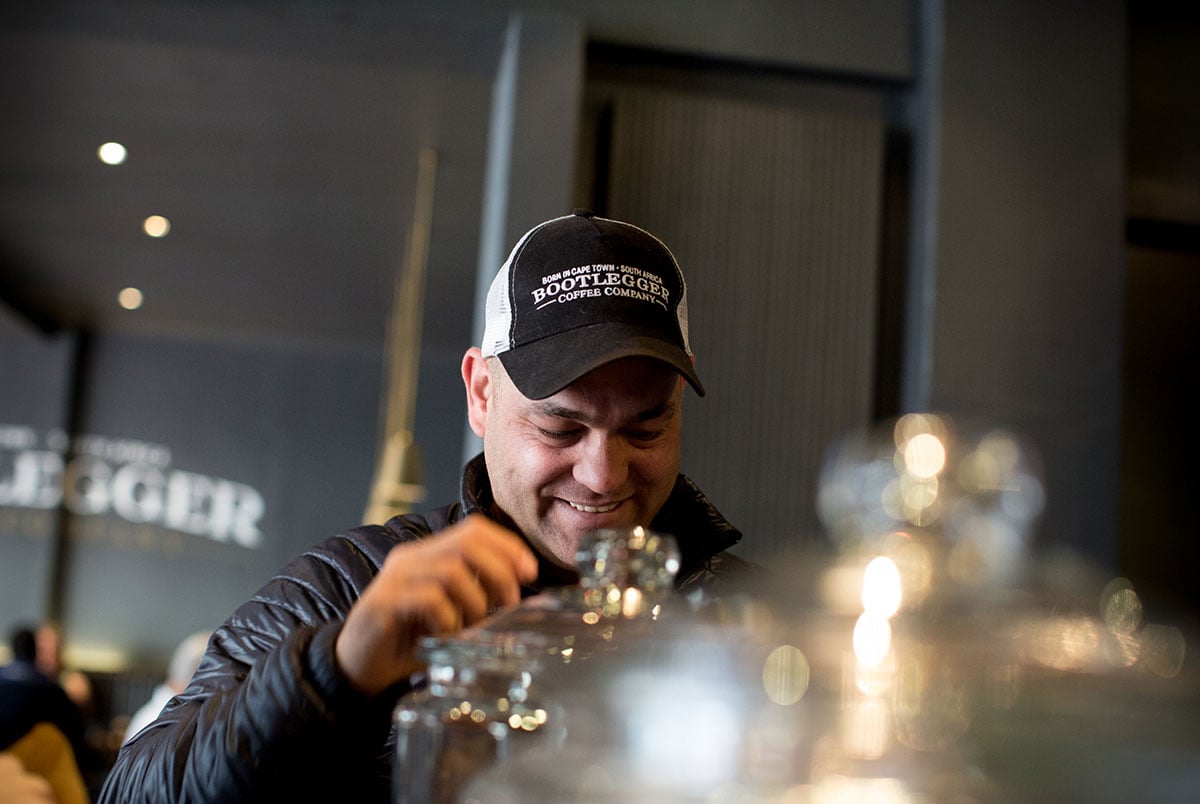
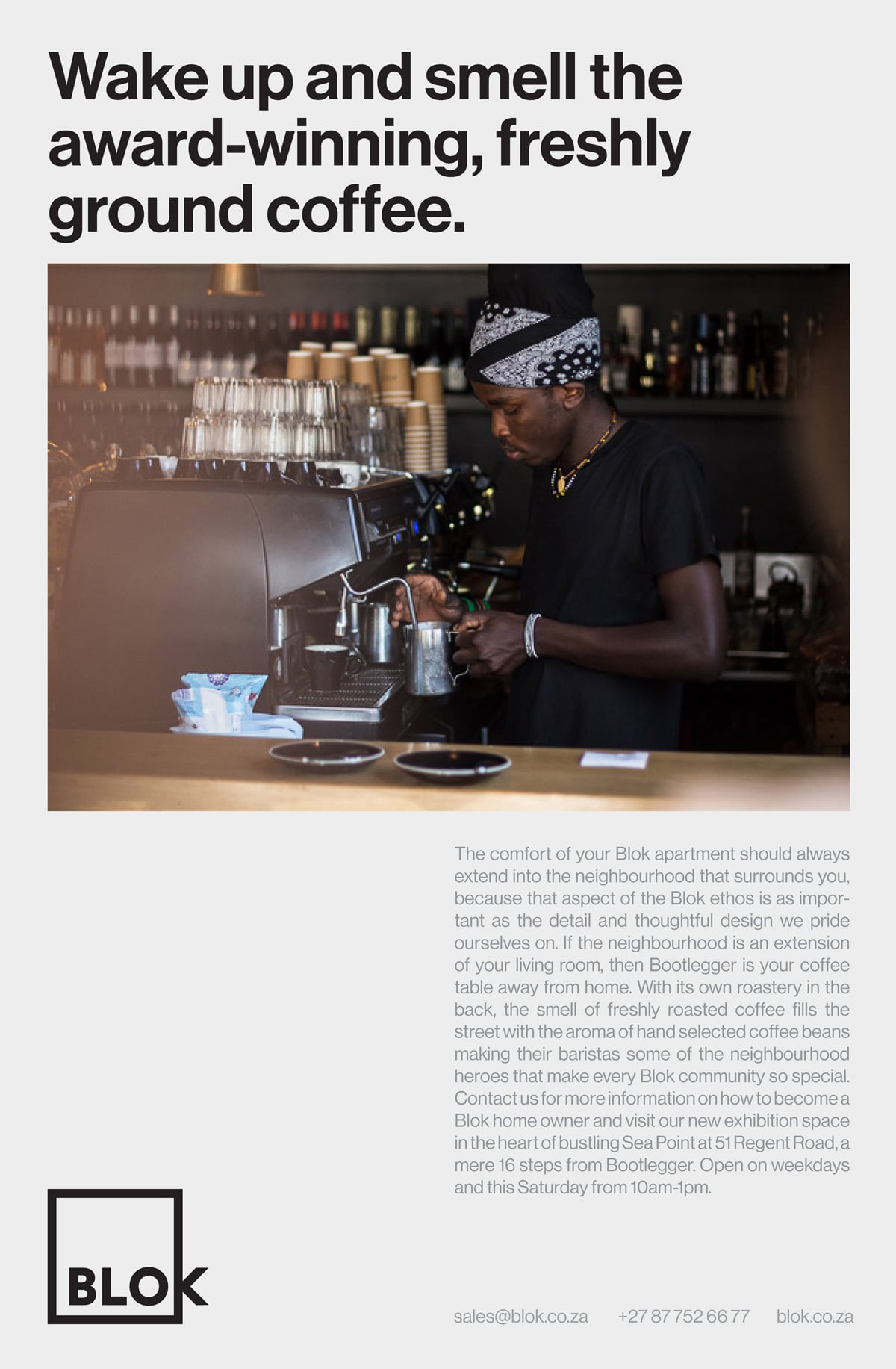
Residents of Sea Point can finally get their morning caffeine fix, Gin ‘n Tonic cupcakes or famous DIY breakfasts at this new trendy and laid-back spot. If you’re not a morning person, they offer a drool-worthy tapas menu for lunch and dinner, and for all those thirsty night crawlers there’s a liquor license until 2am. You have 20 hours in the day to visit them, so bottoms up!
Other than the location, what was it about Sea Point that lured you in?
It has the highest density (other than Hillbrow) and the income bracket is the highest. It’s kind of silly not to open a place here at the moment because it has really come alive. It’s great that there are coffee shops opening up as well because it boosts business and foot traffic. The more restaurants there are, the more it becomes a destination spot for the area.
Do you think the MyCiti bus station right outside your door has affected your business at all?
In the most positive way, definitely! As we all know parking in Sea Point is dreadful so it really helps us.
What different faces do you see every day?
Someone pulled me aside the other day and told me to quickly look around at my restaurant. He pointed out to me that there were kids, hipsters, two old tannies, guys playing bridge and bankers doing a deal all in the same space. So many regulars too, you get your guys who walk in and the waitresses already put their orders through. We have people who come throughout the day – a man named Arthur drinks 15 flat whites and greets everyone. People know each other in our restaurant.
At the end of t he day, the crowd is important because Bootlegger is all about the feeling and no one ever feels excluded. We don’t try too hard to be anything here, we cater for a varied crowd and I think our prices are very competitive too!
What do you think the Sea Point residents want out of their local coffee shop?
We listen to what the people say and we are always approachable. People want healthy food here; the fitness fanatics around this area are incredible. Four or five gyms surround us as it stands, and consistency is important for our regulars. You have to be on top of your game. Sometimes you miss a beat, but we never stop trying to our best.
How has Sea Point changed since Bootlegger joined the scene?
We’ve been open since December 2013 and there’s so much more movement, you see developers walking around and pointing at buildings with plans under their arms. People see that you can gamble here with development and ideas. You can certainly put your chips down for Sea Point.
Hero
Description
Bantry Bay Pharmacy
When feeling the wrath of Cape Town flu, sometimes the best remedy is a friendly face who is willing to go out of their way to recommend the right medication, make you feel better, and check up on you days later. Bantry Bay Pharmacy is the cure. An institution perched on a narrow winding road, their success is to make the customer experience memorable, and uplifting. According to Garth, the owner, “The clients have become part of our extended family.”
So Garth, how long have you been involved in Bantry Bay Pharmacy?
It all began in June 2001 when I was called to try and resurrect an ailing business. It was at a time that I had left the corporate world and was busy consulting to medical businesses as a “Mr. Fix-it.” We made a few changes, built some relationships and began a personalised marketing program. Slowly the business began to build.
Did you always envision yourself as a Pharmacist?
I actually had dreams of becoming an ichthyologist after my years of fishing. For five years I fished and sold the fish we caught for a few ‘bob’ to keep me going. Phew, it was early mornings at the harbour, the lingering tang of “ships coffee” a reminder that the day ahead would be punctuated with demanding customers and sea sick bodies. Heady days, with incredibly real people and everlasting memories.
What was it about that specific corner and area that attracted you in the first place?
The site was wrong at first with its narrow busy road, very little parking and no other attractions. But, the area was crying out for professional care and concern coupled with efficient free delivery, extended trading hours 365 days a year and clinic facilities by professionals who could visualise a new dimension and make a difference to patients’ lives.
How has Bantry Bay changed over the years?
Bantry Bay is a stable commercial environment made up of a permanent population punctuated with clients that spend the summers here and the winters elsewhere. Residential development is ongoing and that’s exactly what fuels our city.
Do you think heritage is the crux to your success?
The image that the business continually strives to develop is based on the tried and tested tenets of relationships marketing. The fundamentals, if properly applied far supersede price as a marketing tool. Oh boy, has it been proven! Dedicated, highly qualified staff coupled with service excellence and the commitment to go the extra mile and make every customer contact a memorable and uplifting experience has been the hallmark of success. The clients have become part of our extended family.
What do you love most about your location?
The opportunity to build your own primary identity. When our clients come to the Pharmacy, they come to see us and no one else.
Neighbourhood Maps
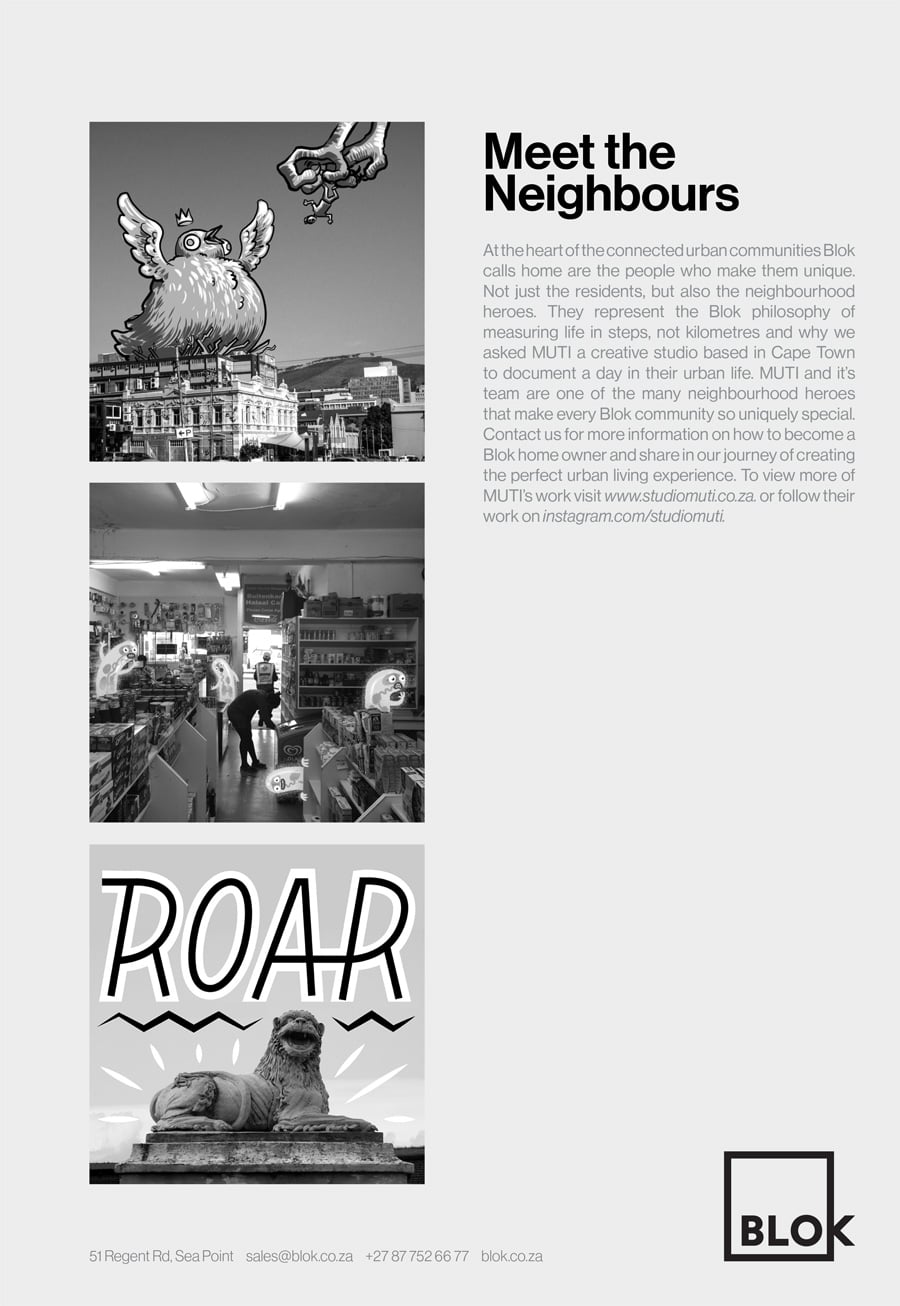
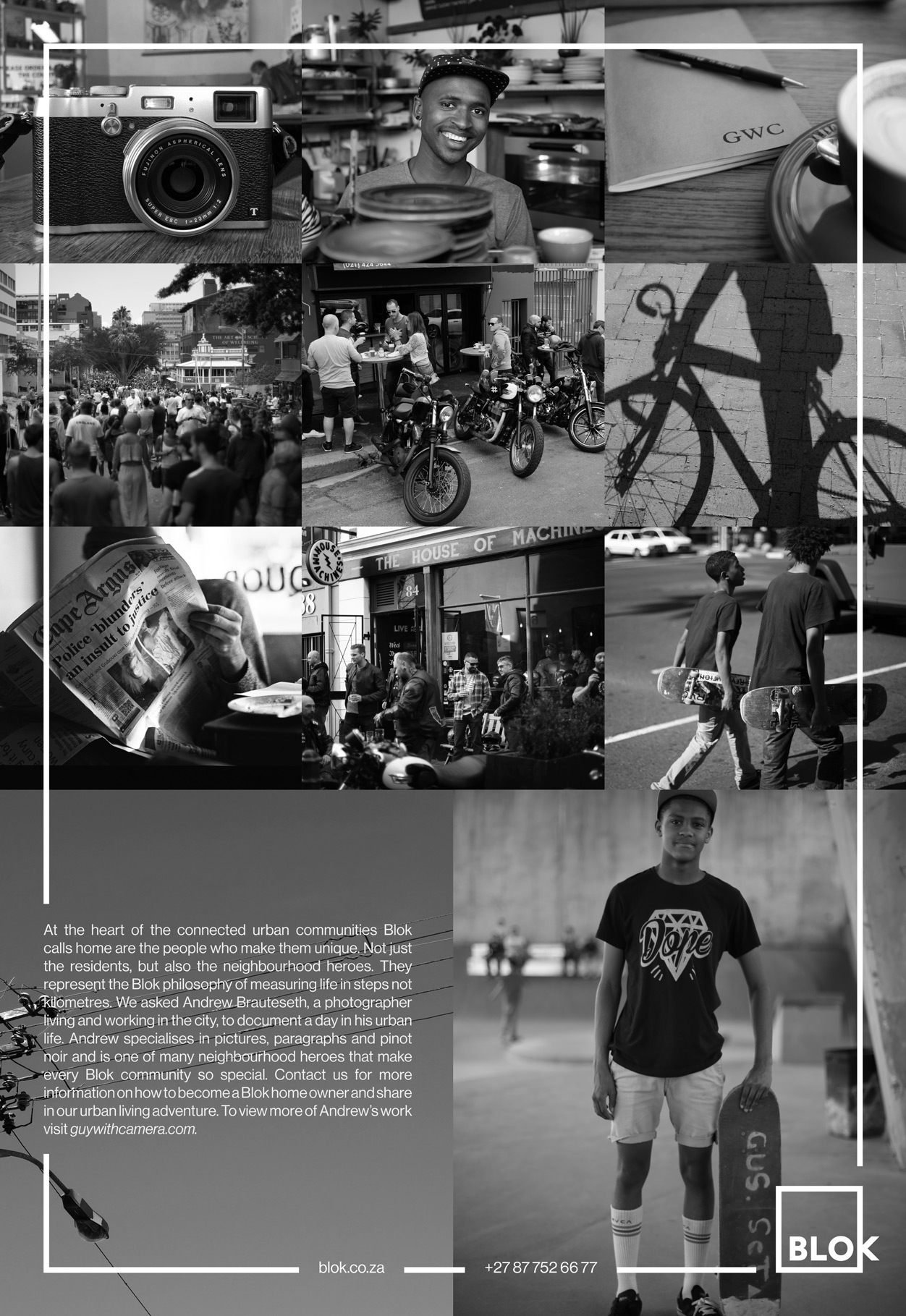
At the heart of the connected urban communities Blok calls home are the people who make them unique. Not just the residents, but also the neighbourhood heroes. They represent the Blok philosophy of measuring life in steps not in kilometres.
Urban interventions.
For everyone.
A building doesn’t exist in isolation. It forms part of a street, a precinct, a neighbourhood, a suburb and a city. We believe our work has a responsibility to extend beyond a development’s walls – to contribute to the vitality of the surrounding location. Through considered urban interventions, we help shape thriving neighbourhoods where people want to live, work, and belong. From an urban parklet to a pedestrian throughfare connecting two parts of a city, our vision is to create spaces for all to enjoy.
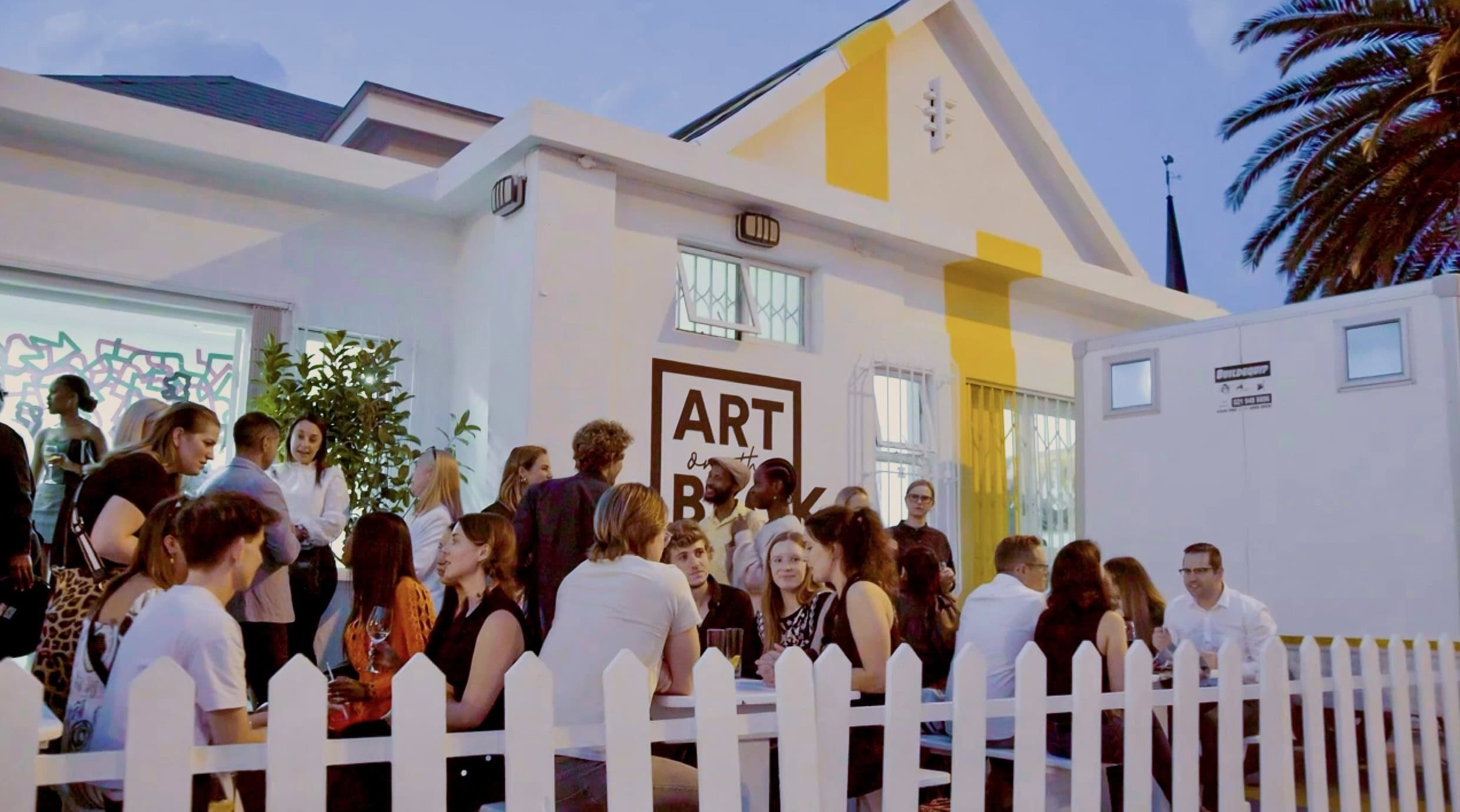
Art on the Blok
Art on the Blok
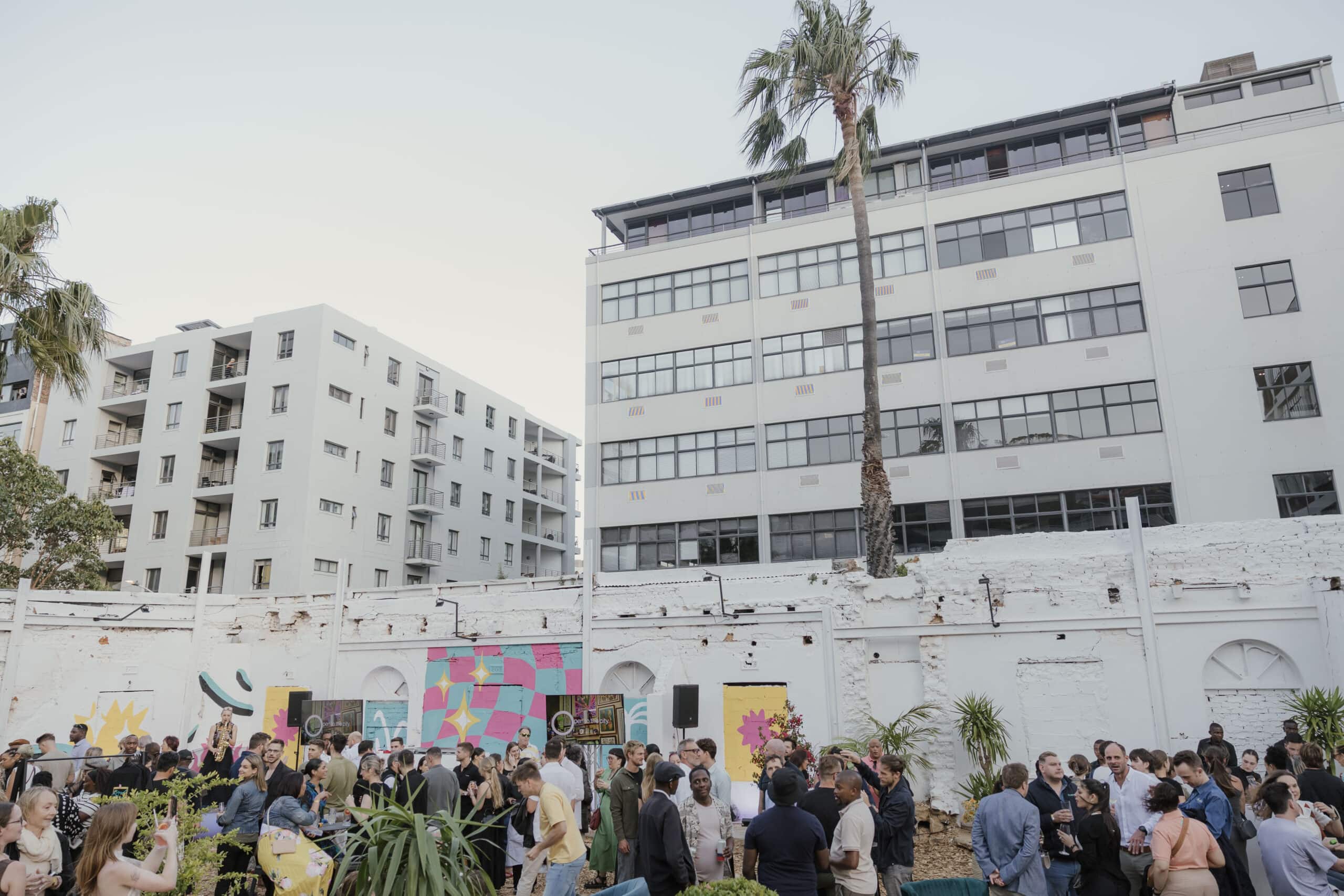
Open Art
Open Art
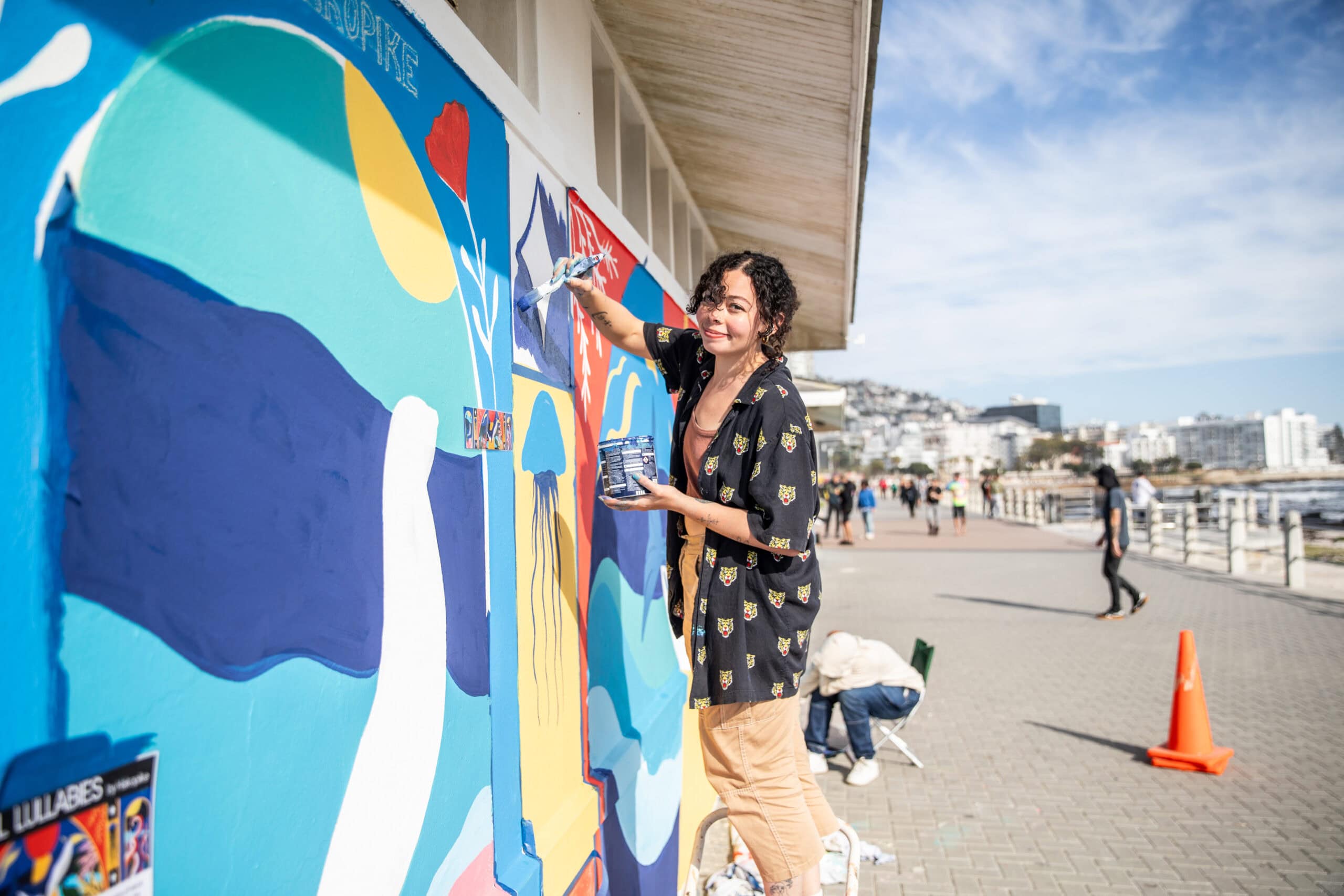
Sea Point Murals
Sea Point Murals
Following our fun Art on the Blok pop-up gallery, this project perfectly embodies our commitment to investing in local art and culture and providing a platform for Cape Town's creative souls.
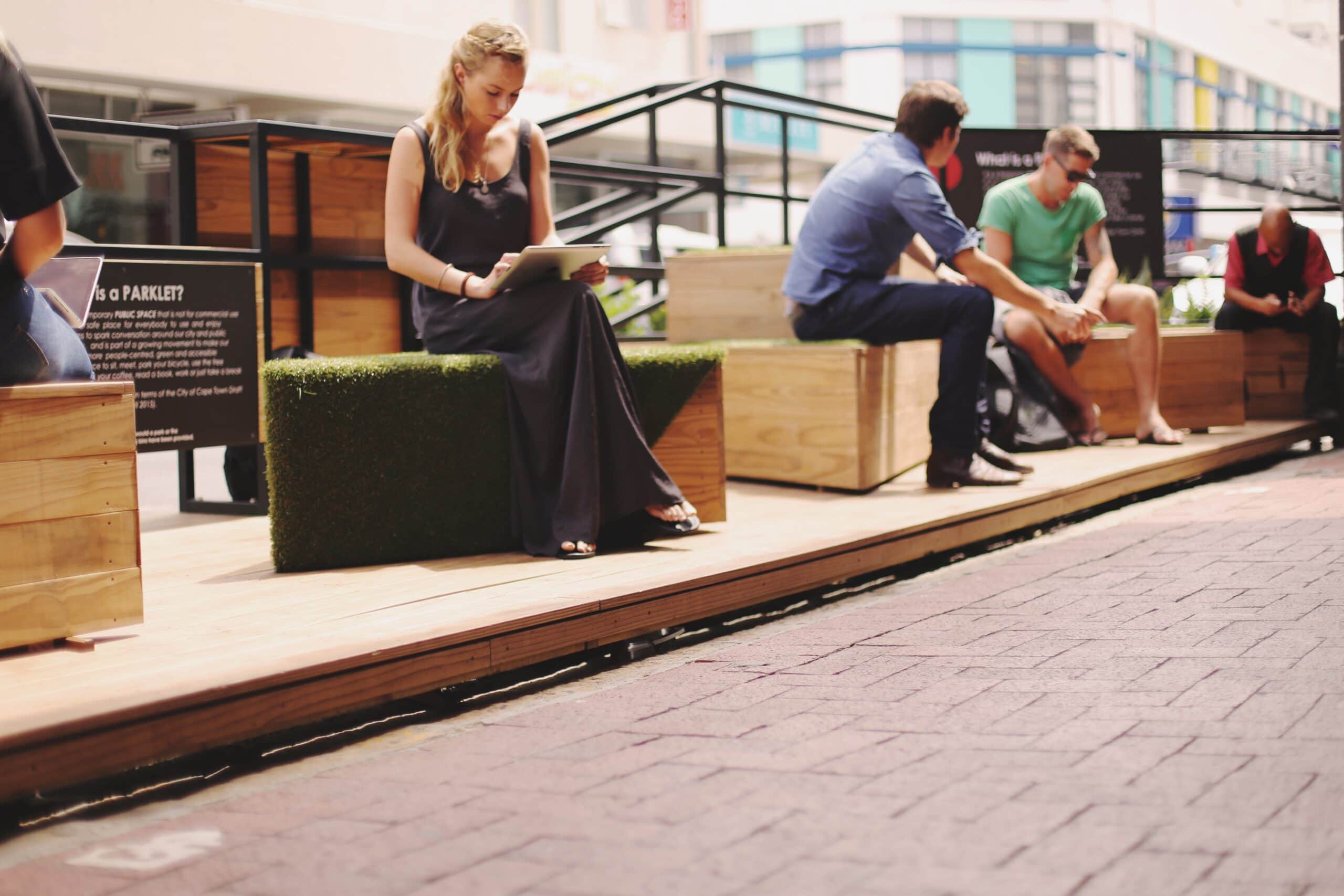
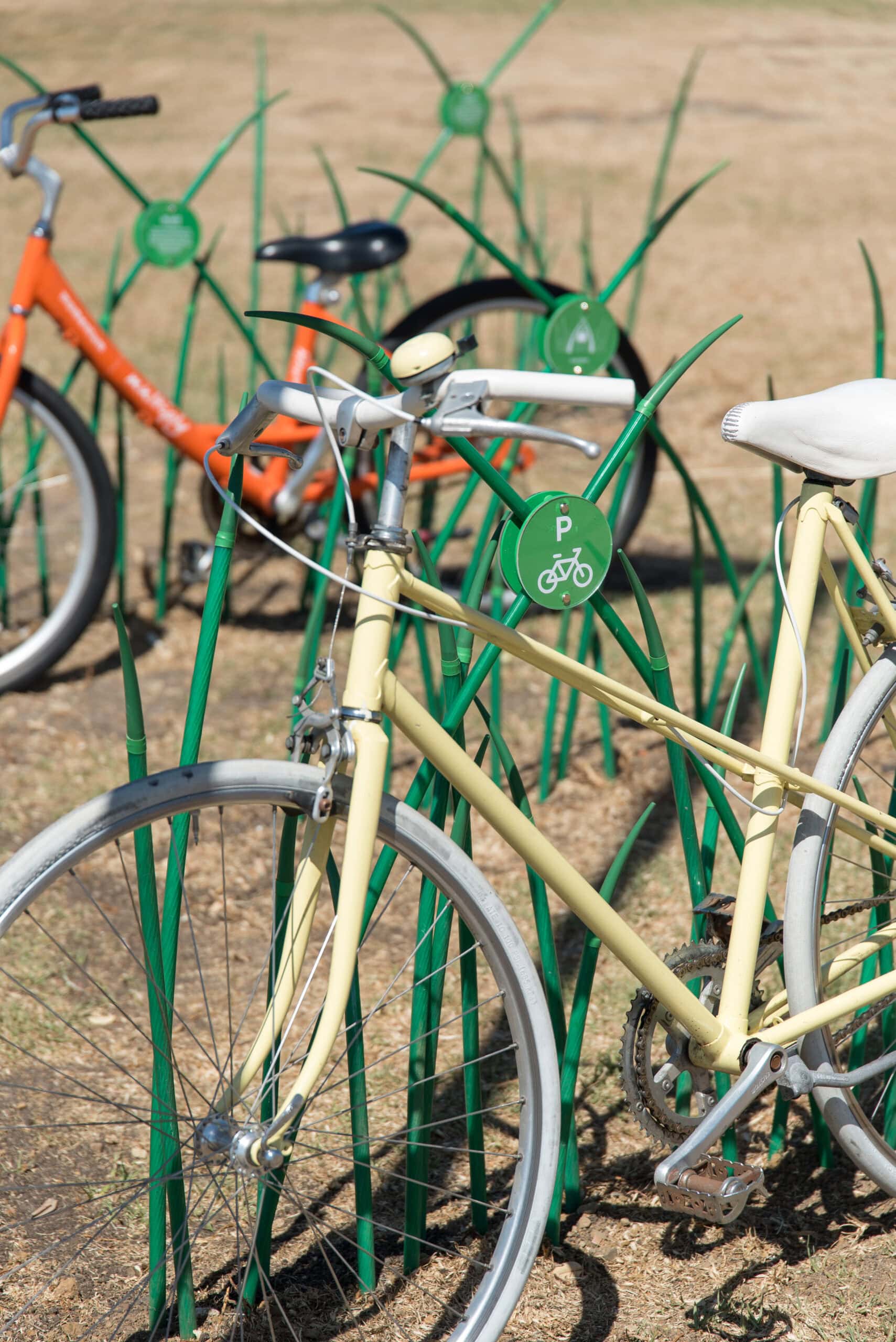
The Parklet
The Parklet
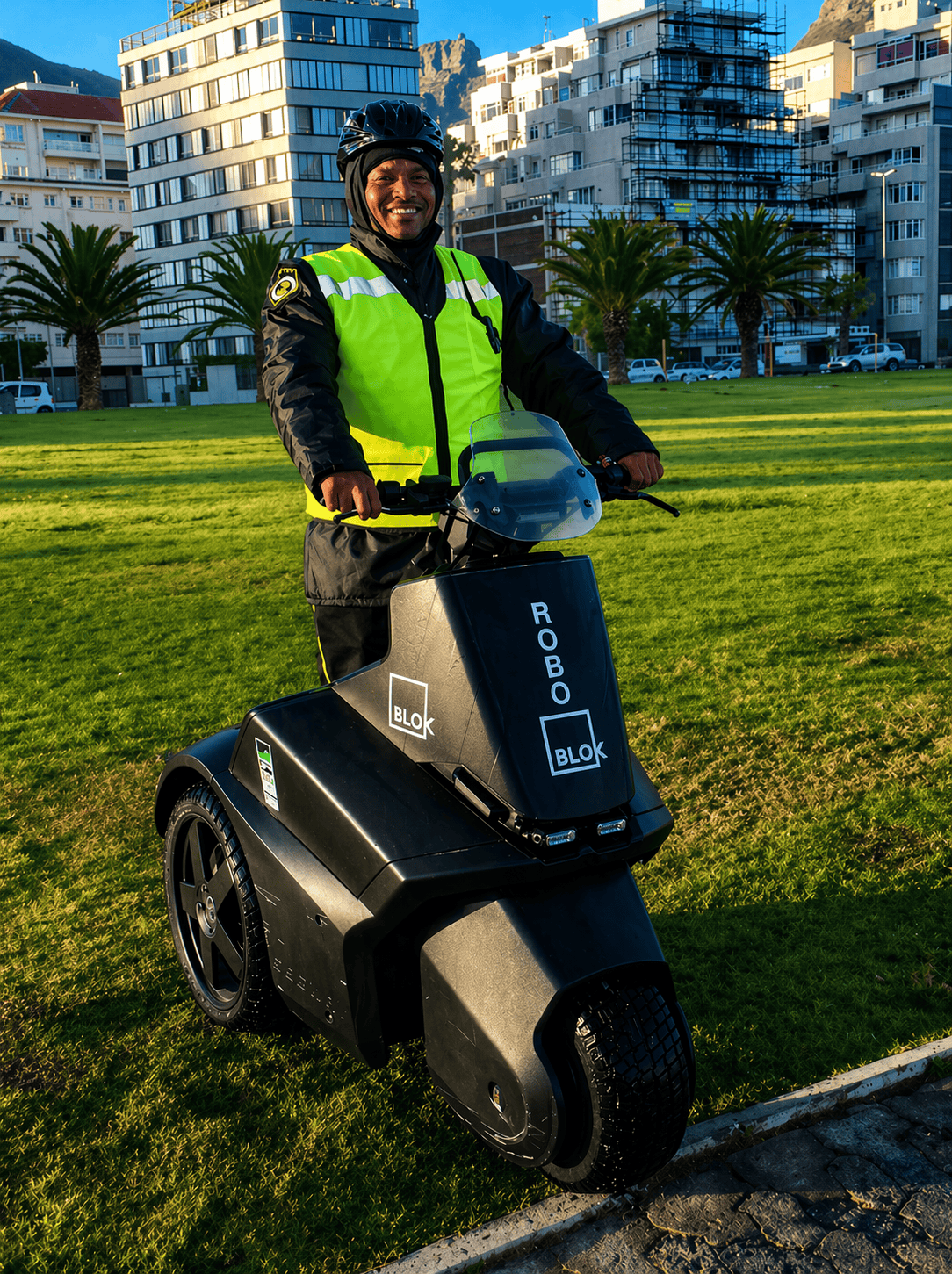
RoboBlok
RoboBlok
Blade
Blade
While Blade succeeded in adding a distinctive design moment to the environment, it ultimately did not achieve the level of uptake or behavioural shift that had been hoped for.
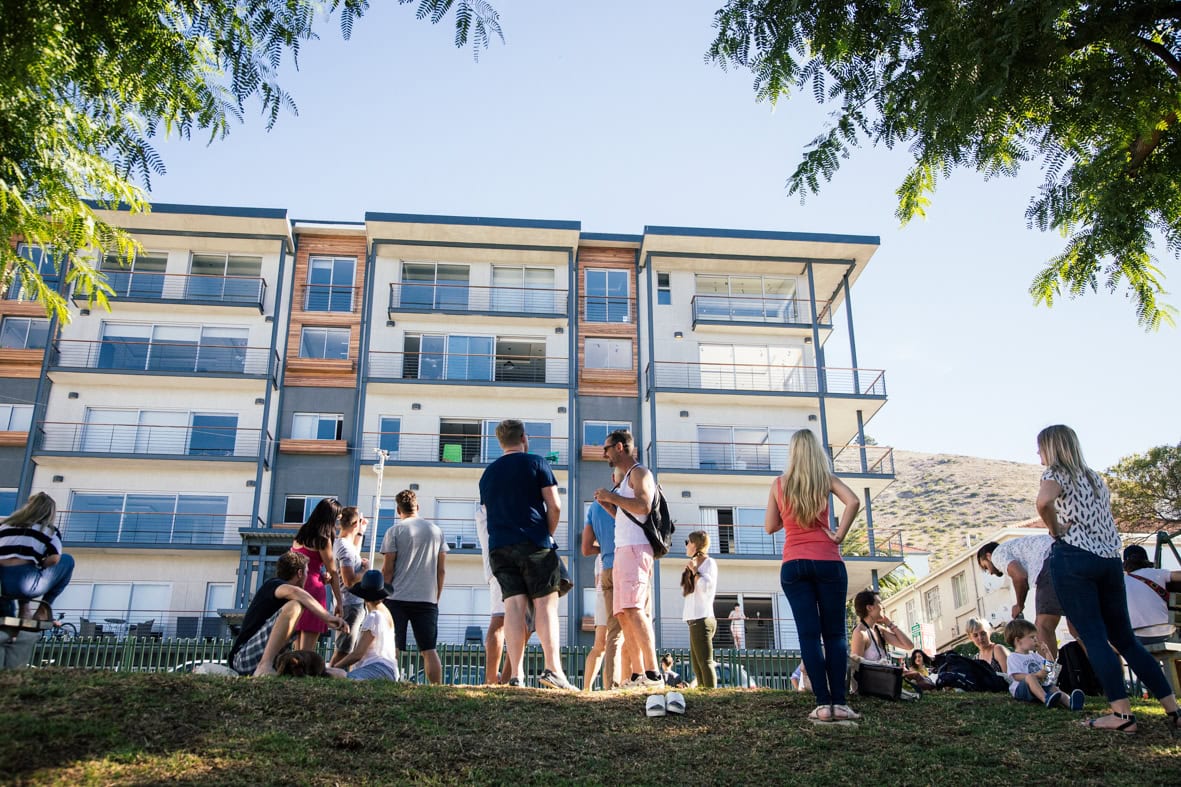
Thornhill Park
Thornhill Park
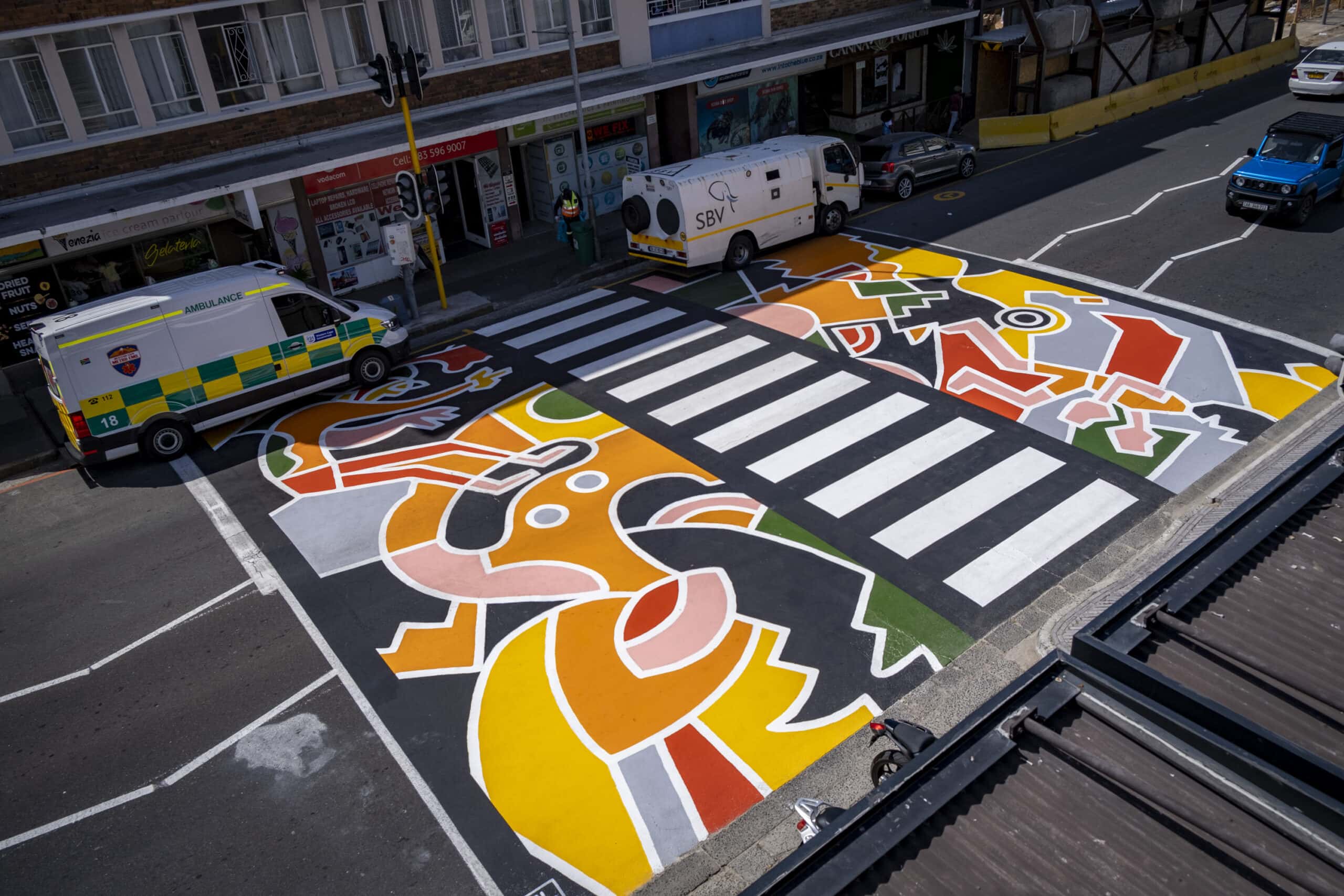
Pedestrian Crossing
Pedestrian Crossing
Sea Point
Sea Point
Sea Point is home to X, Y and Z.
Green Point
Green Point
Green Point is home to X, Y and Z.
Bo-Kaap
Bo-Kaap
Bo-Kaap is home to X, Y and Z.
De Waterkant
De Waterkant
De Waterkant is home to X, Y and Z.
Vredehoek
Vredehoek
Vredehoek is home to X, Y and Z.
The West City
The West City
The West City is home to ELEVENONB.
Neighbourhood heroes.
The butcher, the baker and the flat white maker.
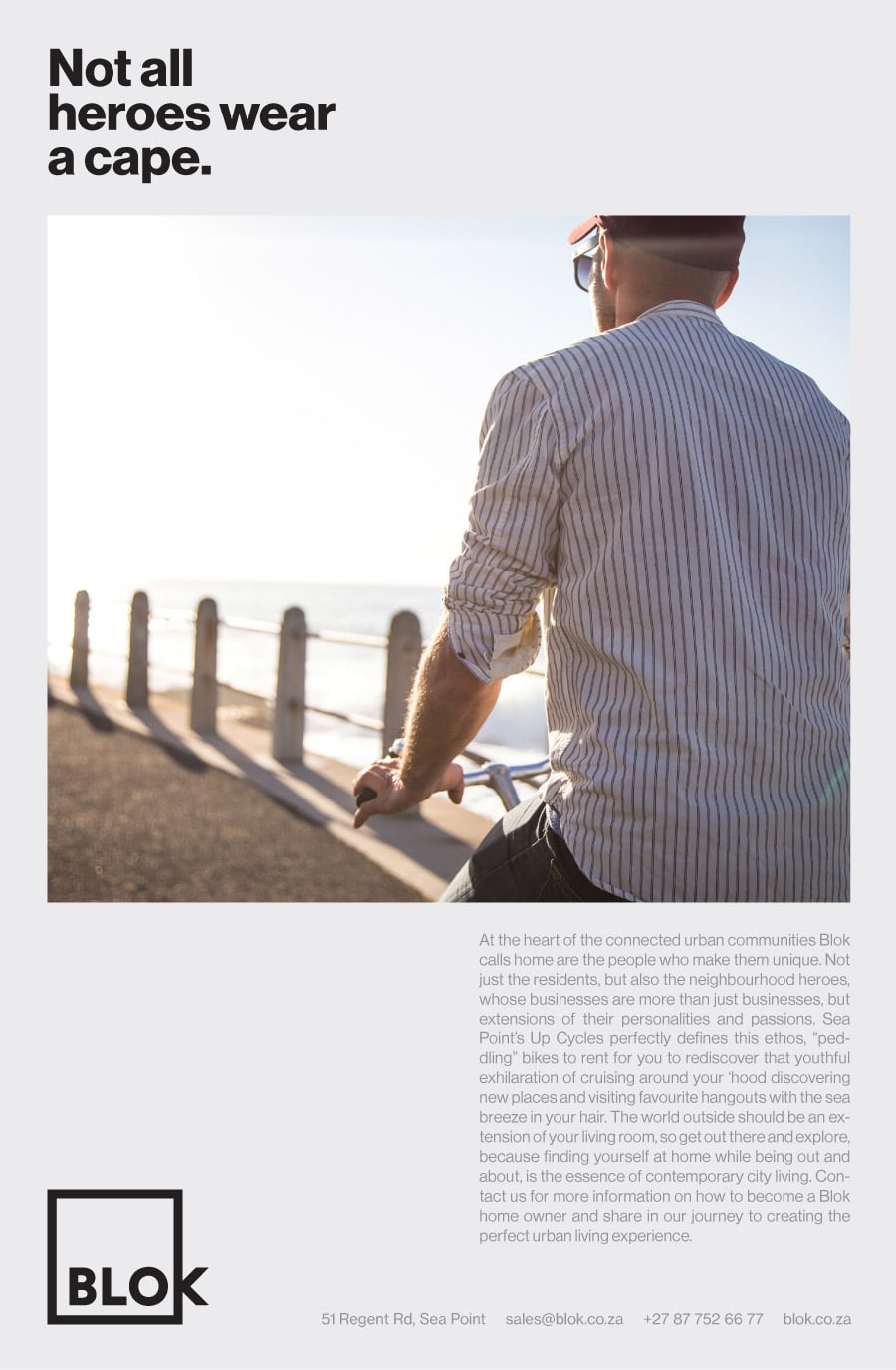
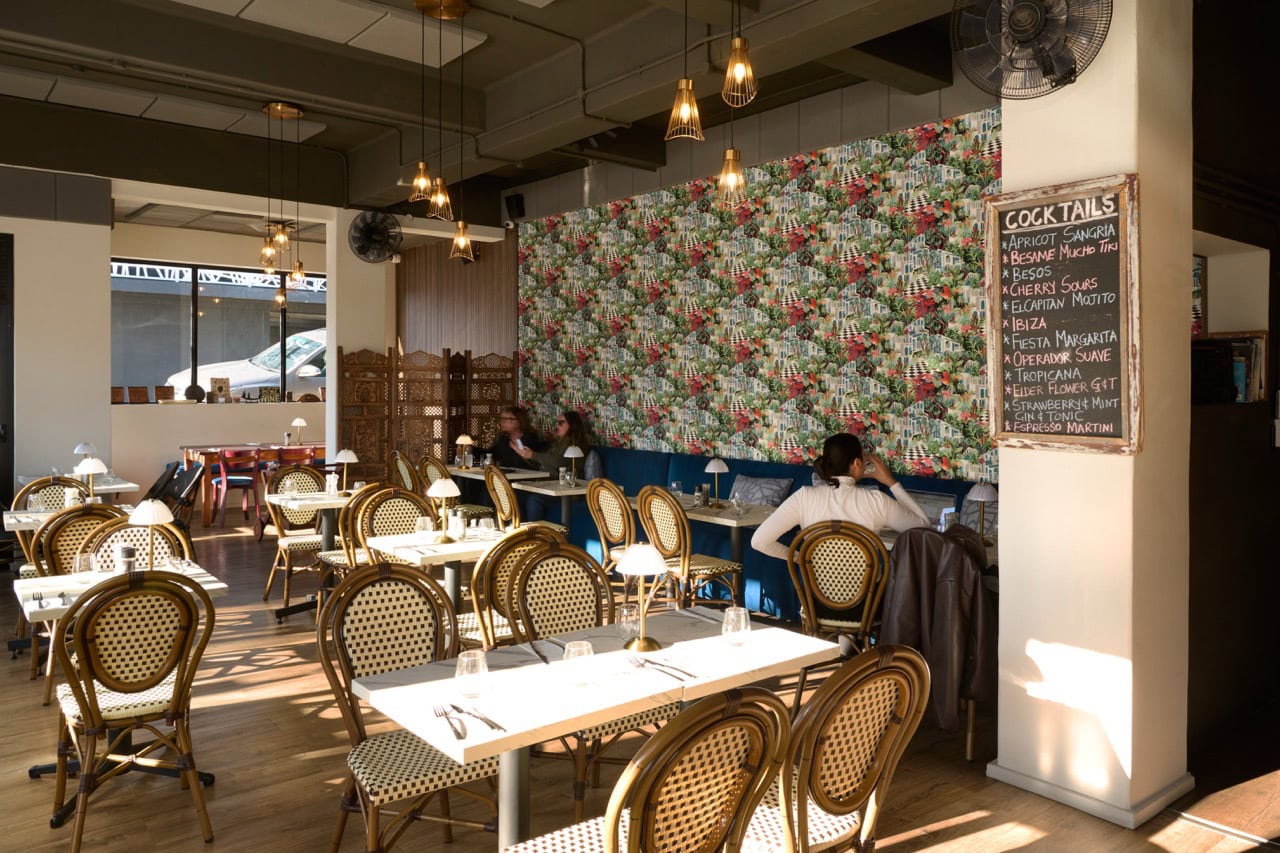
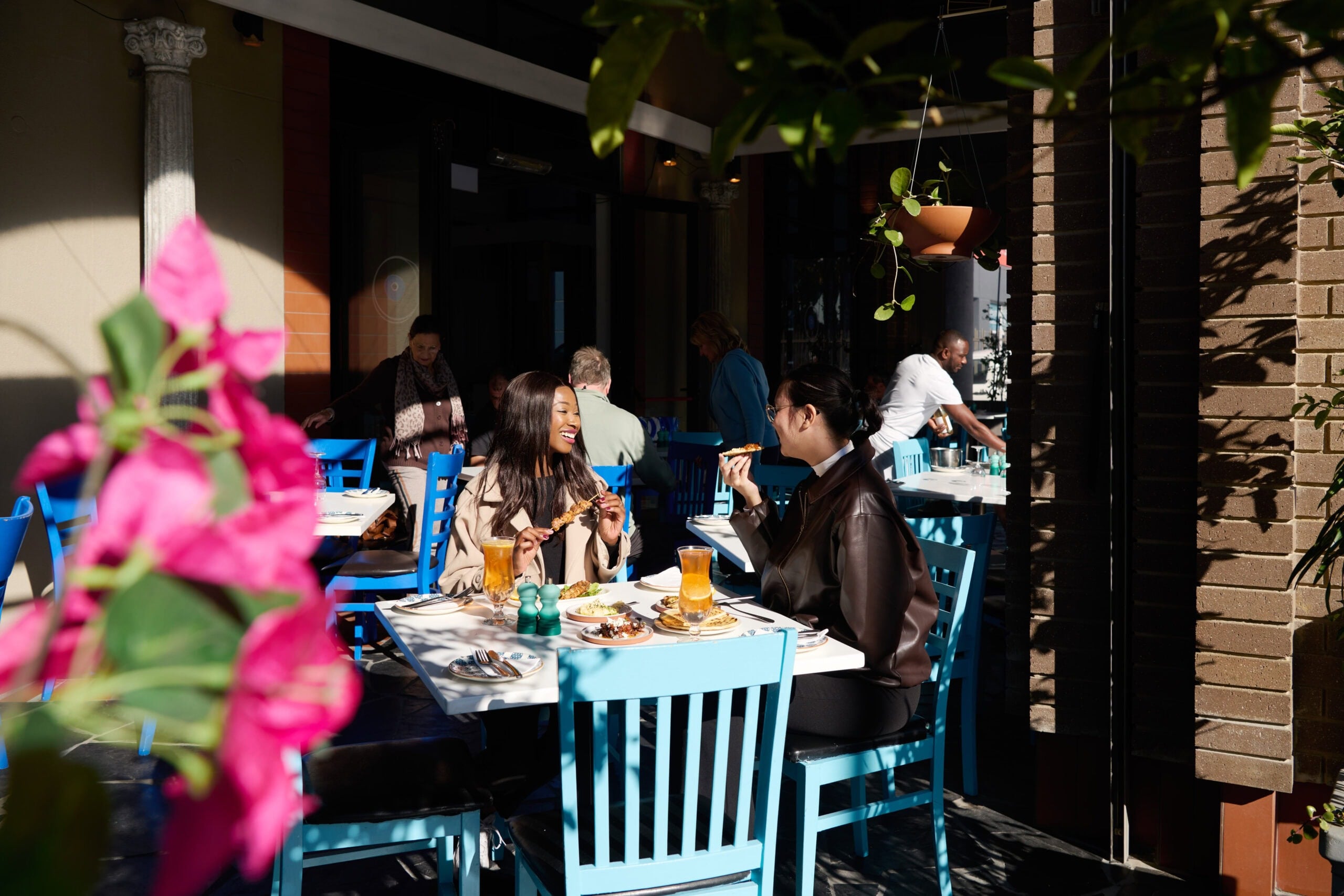
At the heart of the connected urban neighbourhoods we build in, are the people who make them unique. They’re our Neighbourhood Heroes, whose businesses are an extension of their personalities and passions. A face you’ll recognise each day, a space you’ll come to love and a service that’ll keep you coming back for more.
Norfolk Deli
Norfolk Deli
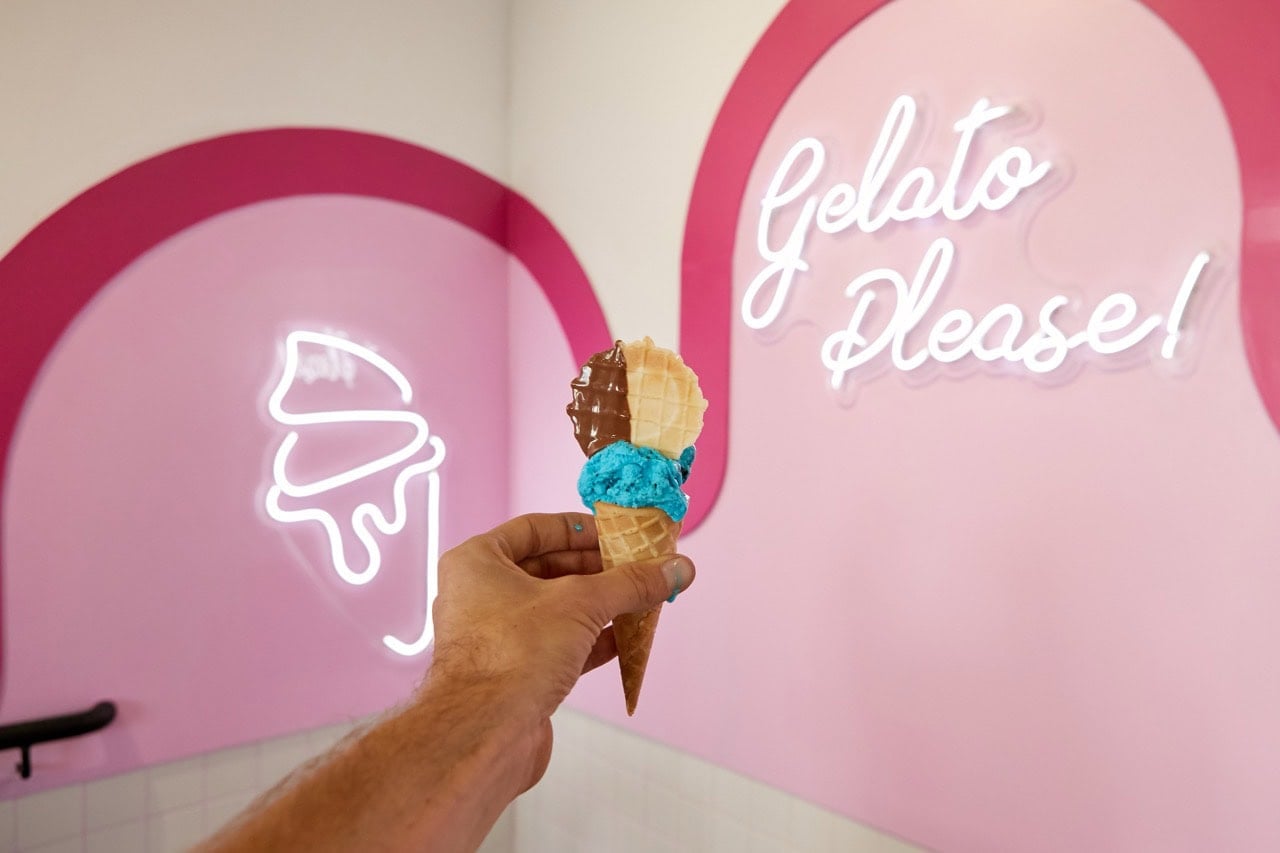
Crumbs & Cream
Crumbs & Cream
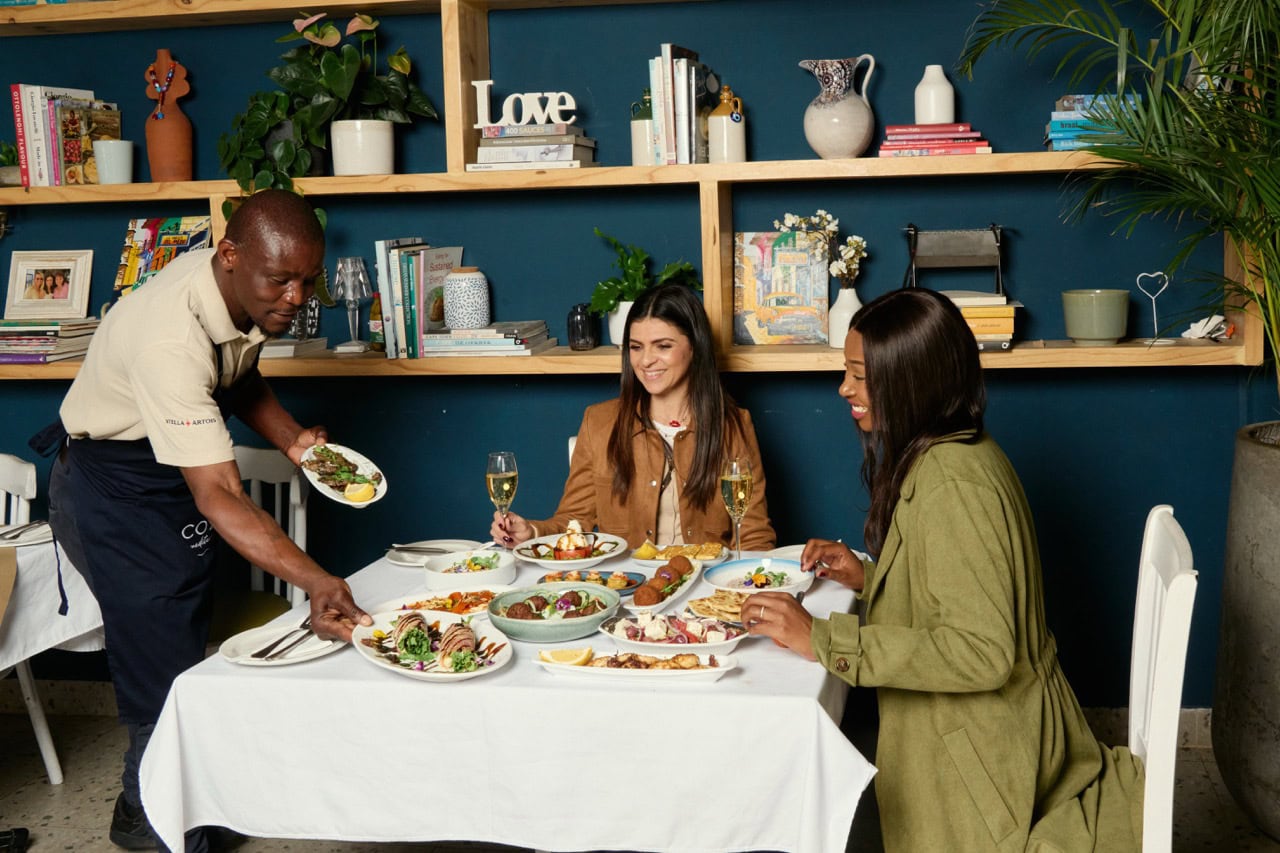
Cozco Mediterranean
Cozco Mediterranean
La Boheme
La Boheme
Mykonos Taverna
Mykonos Taverna
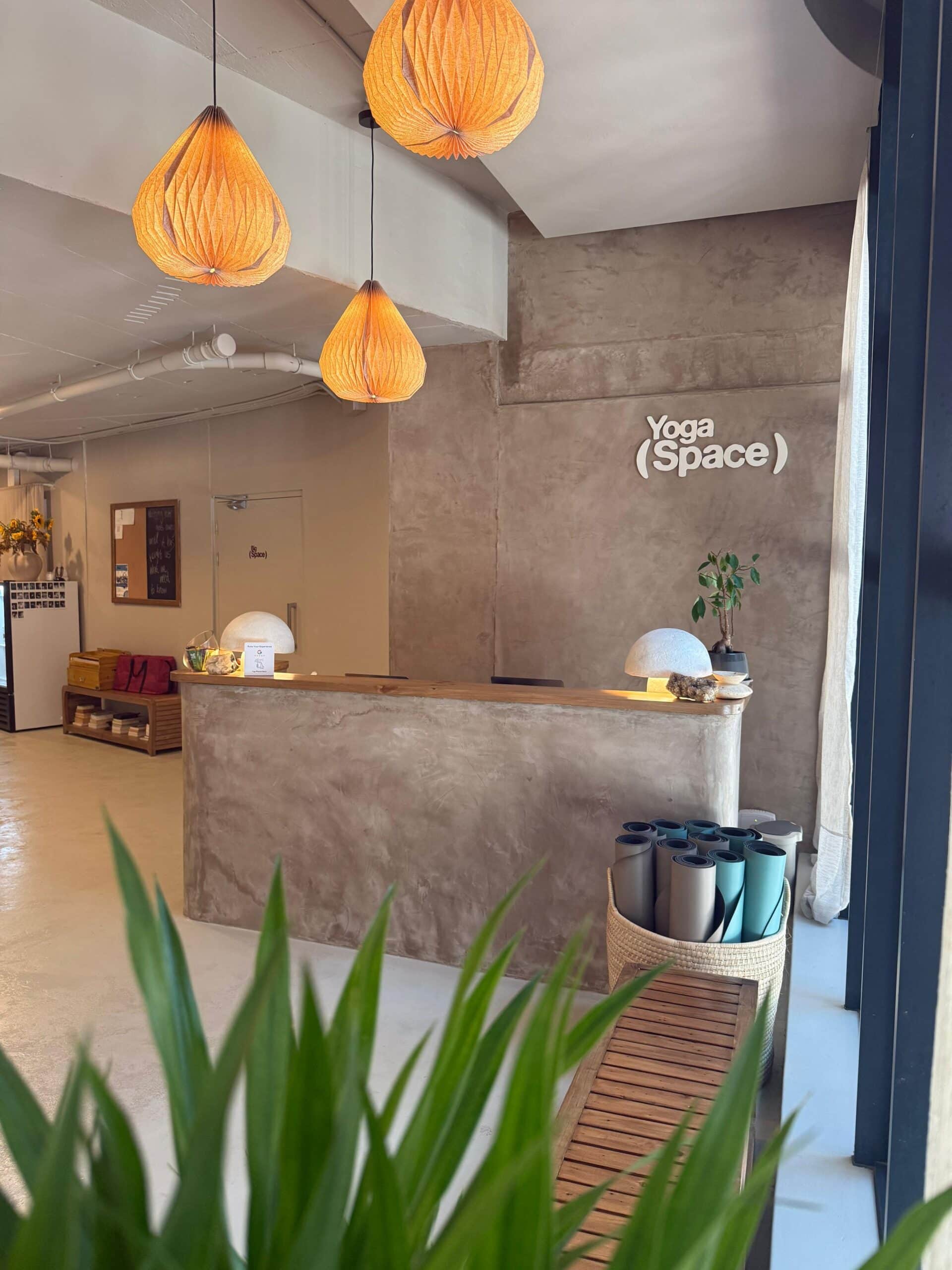
Yoga(Space)
Yoga(Space)
The Club
The Club
Paris Cape Town
Paris Cape Town
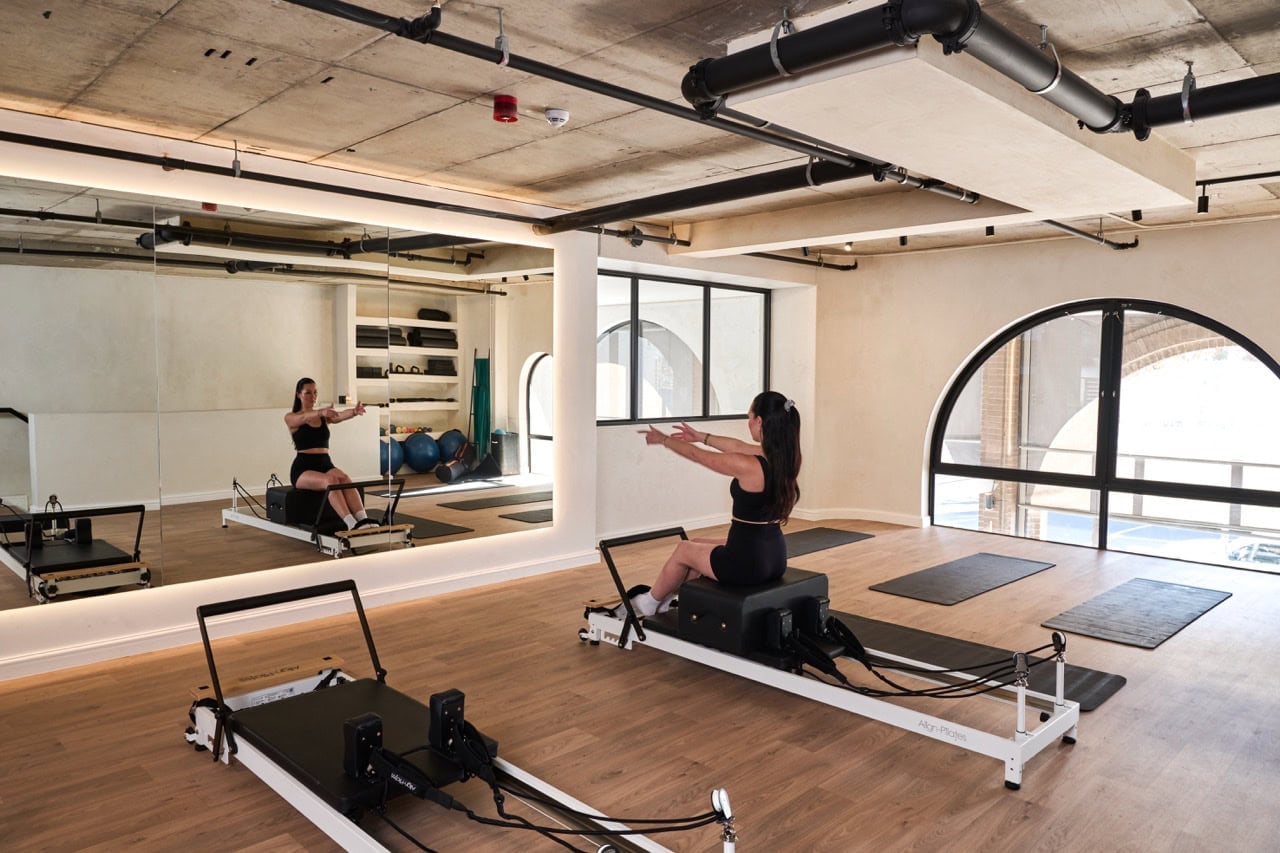
Horizen Gym
Horizen Gym
Our neighbourhoods.
Meet the neighbours.
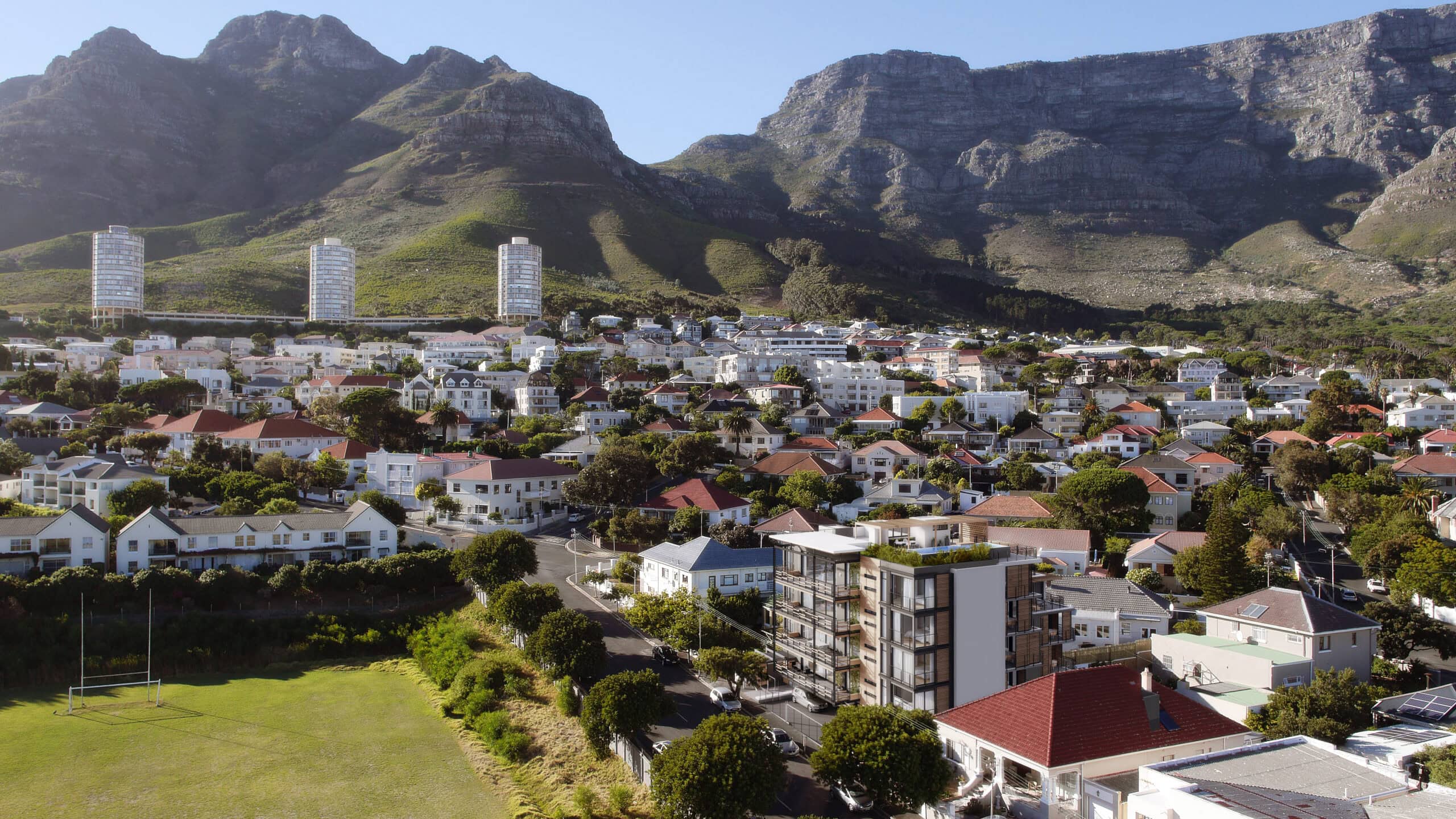
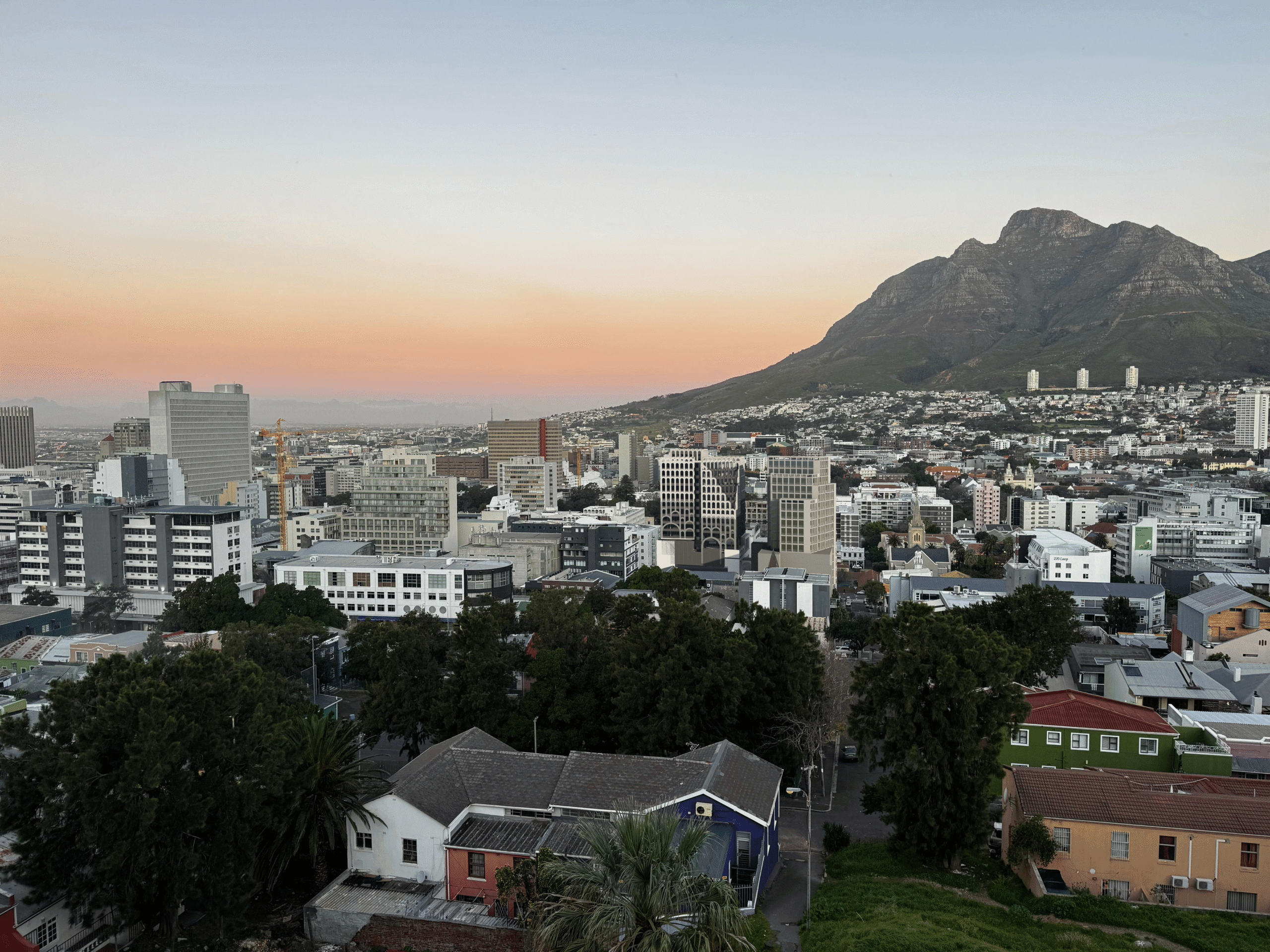
We carefully select locations that are at the intersection of urban property development, architectural innovation, and community-driven living. Our developments are thoughtfully placed within dynamic precincts to enrich both residents and the surrounding neighbourhood. This is how we prove that a home is more than just an address; it’s an opportunity to connect with the pulse of the city. We focus on neighbourhoods with strong identities, like Sea Point, Green Point, Cape Town City Centre, Bo-Kaap, De Waterkant, Vredehoek, and the West City, where we can contribute to creating a better city for everyone.
Sea Point
Sea Point
Green Point
Green Point
Bo-Kaap
Bo-Kaap
De Waterkant
De Waterkant
Vredehoek
Vredehoek
The West City
The West City
Fluent.
Live local, stay longer.
Fluent is our short-term letting management agency of choice, placing dedicated personnel in our buildings to assist visitors and guests, ensuring an outstanding level of comfort, service and security.
Fluent handles the complexities of short-term rentals on behalf of our apartment owners, which allows us to provide a full-service offering – from apartment purchase to investment property management. Fluent’s services allow residents and guests to experience urban living with ease, connection, and possibility, offering everyone an effortless and exceptional stay. Fluent allows property investors to unlock the full potential of their investment and contribute to the broader neighbourhood.
Discover Urban Living, Redefined
Explore our latest developments designed for modern city life. Thoughtfully crafted spaces, prime locations, and a commitment to sustainable living—this is urban living, the Blok way.